



Solving the Nurse Staffing Crisis: What Hospitals Can’t Ignore
Originally published on The Nursing Beat, July 22, 2024

Most nurses took chemistry as part of their nursing school prerequisites. Professors taught students to modify chemical equations, adding and subtracting elements from each side until both sides of the equation were in harmony with one another.
Similarly, the issue of nurse staffing can look like one enormous chemical equation with lots of players, variables, financial investments, and high stakes. Although a bit reductive, boiling the matter down to a simplified equation illustrates how a few key factors interact and how such a grand problem requires solutions from multiple angles.

Take this example:
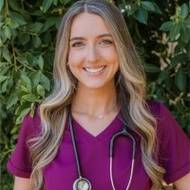
Read on to see how Tyler White, former Vice President of Hospital Services with connectRN, understands and explains his role in the nurse staffing equation and how he hopes to help remedy the issue.
Tyler White and His Role at connectRN
Growing up with a nurse mother, White was exposed to nursing throughout his childhood. He fell in love with nursing while enrolled in a nursing assistant certification program. Following completion of a hospital-based registered nurse diploma program in Canada, he landed a job with Hospital Corporation of America (HCA) in the emergency department in Florida and worked his way up from there. He’s now been a nurse for 30 years!
White got married and started a family, moved from night shift to day shift, and worked as an ER manager and later an ER director. He was given the opportunity to participate in the development of HCA's original Emergency Department Operations Playbook and became deeply involved in hospital operations.
Eventually, he decided to pursue healthcare consulting and announced his departure from HCA on LinkedIn. Ted Jeanloz, who is now the CEO of connectRN, a flexible nurse staffing solution, was the first person to contact him about a potential consulting gig. “We wanted to rekindle a conversation about tackling large health systems and supporting big systems of care,” White recalls.
ConnectRN’s mission resonated with White, especially amid the pandemic, with multiple crises surrounding nurse burnout, hospital bed capacity, price gouging, and labor costs. White was immediately drawn to how connectRN was intentional about solving both sides of the equation: supporting the nurses and the health systems.
Popular Online RN-to-BSN Programs

Chamberlain University is the #1 largest school of nursing with a community of more than 177,000 students, faculty, and alumni. The school offers BSN programs online and has a long history of successfully delivering top quality education. Save up to 30%* on tuition with the RN-to-BSN Tuition Advantage Grant (*see Chamberlain website for details).
 CCNE
CCNE
 Online
 RN Required
Enrollment: Nationwide except CT, NY, RI

When you earn an ASU nursing degree, you are gaining skills from a respected and accredited institution. Our online nursing degrees are accredited by the Arizona State Board of Nursing and the Commission on Collegiate Nursing Education.
CCNE
Online
RN Required
Enrollment: Nationwide

WGU's award-winning online programs are created to help you succeed while graduating faster and with less debt. WGU is a CCNE-accredited, nonprofit university offering bachelor's and master's degrees in nursing, with the additional distinction of being named a Center of Excellence in Nursing Education by the National League for Nursing. Join a trusted, accredited online university to accelerate your nursing career on your schedule. Scholarships and financial aid are available.
CCNE
Online
RN Required
Enrollment: Nationwide

GCU’s RN-BSN program is tailored to meet the needs of the RN adult learner and to maximize the strengths that the working RN already possesses. Transfer up to 90 credits and earn a BSN in as little as 12 months. GCU’s online classes allow you to study at the times that work for your schedule while still enjoying a close connection with your classmates and instructor via online discussions.
CCNE
Online
RN Required
Enrollment: Nationwide

The University of Texas at Arlington’s online programs are designed to help you achieve more in your nursing practice with a Bachelor of Science in Nursing. They offer convenient, flexible options for completing your RN to BSN online, designed to fit into your busy schedule.
CCNE
Online
RN Required
Enrollment: Nationwide
Cash Flow
Healthcare is a business with necessary evils like confronting the cash flow of any proposed solution to the nurse staffing crisis.
Here are some takeaways on how cash flow fits into the nurse staffing equation:
- Nursing demand: It’s obvious that the demand for nursing will continue to rise, given increasing nurse retirement, the aging population on the rise, and pandemic-related stressors inciting more nurses to leave the profession early. White understood that the demand for nurses is increasing and has to be factored into how healthcare corporations approach staffing. Working with connectRN, he says, “I would have a team that was transparent about being really unapologetic about being nurse-centric.”
- Labor costs: Labor costs are one of the primary issues that hospitals face when trying to maintain and control costs, White explains. “Ensuring you have consistency in staffing is paramount.” There are a number of factors that make it difficult for hospitals and health systems to offer complete scheduling flexibility to their nurses. The facilities need to know that their night, weekend, and holiday shifts are covered. “Travel nursing can provide them some consistency, but only for a brief period of time,” White adds. Plus, travel nurses are much more expensive than the national average for a staff nurse.
- Price gouging: Especially during the pandemic, it was hard for hospitals to keep staff nurses due to burnout and the huge surge in travel nurse pay and crisis contracts. “I felt that when the hospitals were more desperate for help, there was more price gouging. Some agencies were taking advantage of hospitals and health systems when it came to increasing the rate for labor,” White says. connectRN's model harmonizes the utilization of contract labor by providing complete scheduling flexibility to the nurse, while at the same time providing the hospital with contingent labor at sustainable costs.
Facility Capacity
Two overarching themes often impact nurse staffing: how much patient volume a facility can handle and how it treats its staff.
Here are some of the key elements:
- Hospital beds: White says most people didn’t understand or appreciate the strength of the headwinds faced by hospitals, who worked desperately to keep beds open, give nurses a safe working environment, and budget for staffing during the pandemic. Many hospitals had to close beds to pay for labor, which White didn’t see as the best solution. “The closing of beds exacerbates the problem, increasing the workload of the nurses who are still at the facility while at the same time limiting access to care in the communities those hospitals were trying desperately to serve,” he explains.
- Facility competition: There’s a bit of competition between hospitals for where patients decide to go, especially for labor and delivery and elective surgery. But for inpatient care, a lot of that competition centers around which facility can be most appealing to the staff. White explains that connectRN's proprietary clinician community provides a forum for nurses to share their work experiences, allowing for increased transparency regarding working conditions.
- Pandemic crisis: The pandemic was an insane time for everyone, White recalls. “Trying to find critical care beds during the height of the pandemic when everyone was intubated and getting ECMO. The shortage of resources at that time was astronomical, he says, and connectRN sought to inject one of the most important resources back into hospitals: nurses.
Popular Online Master of Science in Nursing (MSN) Programs
Chamberlain University is the #1 largest school of nursing with a community of more than 177,000 students, faculty, and alumni. Chamberlain offers BSN, MSN, NP and DNP programs online and has a long history of successfully delivering top quality education.
CCNE
Online
RN Required
Enrollment: Nationwide except CT, NY, RI

Whether you’re taking the first steps toward a nursing degree, seeking to advance as a nurse or want to hone your craft with specialized study, there’s a path for you at Purdue Global’s School of Nursing. Our programs were designed so that you can easily balance your lives at home and work with school - without sacrificing the rigor and cutting-edge curriculum of a quality nursing education.
CCNE
Online
RN Required
Enrollment: Nationwide, but certain programs have state restrictions. Check with Purdue for details.
GCU's College of Nursing and Health Care Professions has a nearly 35-year tradition of preparing students to fill evolving healthcare roles as highly qualified professionals.
CCNE
Online
RN Required
Enrollment: Nationwide
-
MSN - Psychiatric Mental Health NP
-
MSN - Family NP
-
MSN - Adult-Gerontology Acute Care NP
-
MSN - Health Informatics
-
MSN - Nursing Education
-
MSN - Public Health Nursing
-
MSN - Health Care Quality & Patient Safety
-
MSN - Nursing Leadership in Health Care Systems
-
MBA & MSN - Nursing Leadership in Health Care Systems

The Berkley School of Nursing at Georgetown University is one of the world’s leading academic and research institutions, and the university has been delivering graduate nursing programs in a distance-learning environment since 2011. The university's online programs allow students to learn from wherever they are while they pursue an accredited, mission-driven nursing education that will allow them to deliver high-quality care.
CCNE
RN Required
Enrollment: Nationwide, excluding NY and WA.

Earn your nursing degree from one of the largest nursing education providers in the U.S. Walden University’s BSN, MSN, post-master’s APRN certificate, and DNP programs are accredited by the Commission on Collegiate Nursing Education (CCNE). Get enhanced practicum support with our Practicum Pledge.
CCNE
Online
RN Required
Enrollment: Nationwide, excluding CT, ND, NY and RI. Certain programs have additional state restrictions. Check with Walden for details.
The X Factor: Nurse Morale
One of the most important aspects of nurse staffing may seem simpler than it actually is: Nurse morale and satisfaction. ConnectRN plays a part in each piece of the equation but especially with its flexibility for nurses.
With their flexible nurse staffing model solution, connectRN allows nurses to join their staffing pool and choose to work shifts at local hospitals whenever they want.
Through these benefits, connectRN shines:
- Flexibility: Even though most nurses want more flexibility, a lot of complexity accompanies per diem staffing, White explains. Facilities carry costs for keeping that nurse on the books, their continuing education, their HR compliance, their credentials, and especially onboarding costs. Hospitals have trouble taking the burdens of these costs without having the surety of planning their staffing weeks or months in advance, the same way they could with full-time employees. ConnectRN eliminates all of these concerns from their hospital and health system partners by assuming the responsibility of these burdens, effectively increasing the bench strength of the facility's PRN pool of qualified clinicians without adding any incremental administrative costs.
- Reducing burnout: All nurses need a break sometimes, White says. With connectRN, you choose your breaks–timing and length. No one can deny your time off, and no one can tell you you can’t stack your shifts the way you want to. You can contribute as much or as little as you can give to the bedside, White shares. Sometimes that’s only a few times a month. While many facilities can’t accept that small a commitment, connectRN does.
- High-quality working conditions: connectRN partners with hospitals with staffing needs, but they seek to provide nurses with the best working experiences they can. The benefit of working with connectRN, White says, is that connectRN clinicians have the flexibility to work at multiple facilities, allowing them the ability to identify the facility and unit that is the best fit for them.
The Bottom Line
“I think healthcare is more challenging than it’s ever been. I also think healthcare is more rewarding than it’s ever been.”
-Tyler White, former Vice President of Hospital Services with connectRN
As nurses embrace their value in the nurse staffing equation, they can seek working conditions that offer the flexibility and professionalism they deserve.
Want to be part of that X Factor? Sign up for connectRN today.