



How One Nurse Became a Stem Cell Donor and Gained a New Perspective on Patient Care
- Nurse Julie Zgola became a stem cell donor two years after joining the national stem cell donor registry.
- Most patients depend on unrelated donors, making registry participation critical for saving lives.
- Joining the stem cell registry is simple—starting with a cheek swab—and one match can make a life-changing difference.
Image: Hackensack Meridian Health
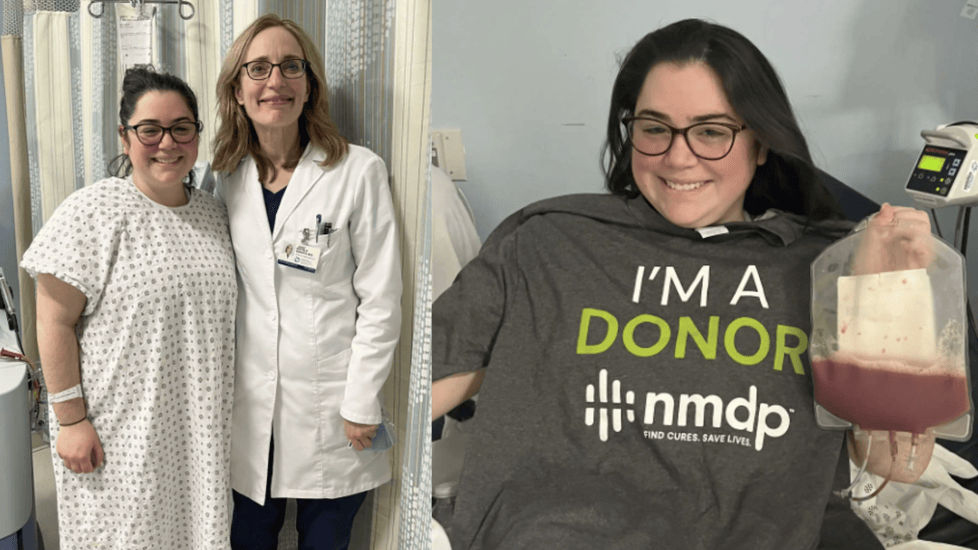
Julie Zgola, a 30-year-old assistant nurse manager in the Bone Marrow Transplant and Cellular Therapy division at John Theurer Cancer Center, has seen her fair share of stem cell transplants. But in February 2025, she found herself on the other side of the process—not as a nurse, but as a donor.
Julie’s experience wasn’t just a career milestone; it was personal. She explains, “We go into nursing because we want to help people, and there’s always a limit as to how much you can do. So if I can go that one step further, I feel like I've done absolutely everything in my power to be a wonderful nurse.”

A Call That Changed Everything
Julie joined the national stem cell donor registry through NMDP (formerly known as the National Marrow Donor Program and Be The Match) back in 2022, but if you know anything about the odds of getting matched, you know it’s not exactly common. For some ethnic groups, finding a donor can be extremely difficult due to limited registry diversity. Fast forward to October 2024, and Julie got that voicemail, the one saying she was a match. She and her coworkers listened to the message multiple times in disbelief.
For Julie, the decision to donate wasn’t even a question. Her work in stem cell transplantation gave her a deep understanding of how critical donors are. She’s witnessed the heartbreak when a donor backs out after a patient has already started prepping for transplant. For some patients, it’s literally a life-or-death moment. As Julie explains, “Once you get to that point, there may be no turning back for these patients. They could be in remission once and then never again.”
Walking in Her Patients’ Shoes
Nurses are known for their empathy, but Julie’s donation took that to a whole new level. Part of the donation process involves receiving tbo-filgrastim (Granix) injections to stimulate stem cell production. While Julie had educated patients about this treatment countless times, experiencing the side effects firsthand gave her a wake-up call. “You don’t really know what it feels like until it happens,” she shared.
And then there was the central line. Oh, the central line. If you’ve ever placed one or cared for a patient with one, you know it’s no small thing. But having it done to herself? That was a game-changer. Julie now approaches her patients with a new level of understanding and compassion because she’s literally been in their shoes.
Dr. Michele Donato, Chief of Stem Cell Transplantation and Cellular Therapy at John Theurer Cancer Center, wasn’t surprised by Julie’s decision to donate. “She is so kind. If she’s your nurse, she’s going to treat you like she’s your neighbor,” Dr. Donato said. And Julie isn’t alone in her generosity. Her colleague, Emily Coiro, also donated stem cells to save a stranger’s life. Talk about nurses going above and beyond.
Why Stem Cell Donation Matters
For patients with leukemia and other blood cancers, stem cell transplants can be their best, and sometimes only, chance at survival. Julie puts it plainly: “Without the transplant, the patient’s leukemia can come back. So really, it’s the transplant that gets rid of the cancer.”
Here’s the thing, though: only about 30% of patients find a match within their families. That means many rely on unrelated donors from the registry. According to NMDP, thousands of patients every year are waiting for someone, just one person, to be their match.
Julie has become a passionate advocate for registering as a donor, emphasizing how critical it is. “They need more donors,” she says. “One person can make a difference.”
For nurses, Julie’s story is a reminder of the power of stepping into our patients’ experiences. Whether it’s donating stem cells, learning what it’s like to live with a central line, or just truly listening, these moments of connection can transform the way we practice.
Thinking About Joining the Registry?
Becoming a stem cell donor is far easier than most people realize. You start by completing a quick cheek swab kit to join the NMDP registry. If you’re identified as a match, the donation method—either peripheral blood stem cells or bone marrow—will be based on what’s best for the patient. The NMDP website breaks down each step clearly, so if you're considering signing up or just want to understand the process, you can find everything you need there.
🤔Nurses, what experiences have changed the way you care for your patients? Share your thoughts in the discussion forum below!
If you have a nursing news story that deserves to be heard, we want to amplify it to our massive community of millions of nurses! Get your story in front of Nurse.org Editors now - click here to fill out our quick submission form today!