




Drones, Airstrikes, No Water: Myanmar Nurses Defy Jungle Odds to Graduate in Secret
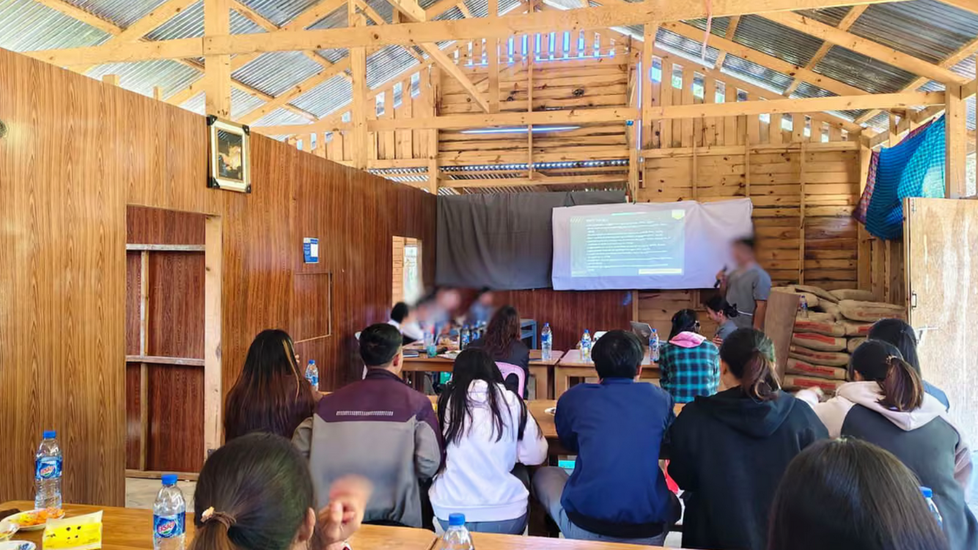
- 21 student nurses in Myanmar completed a three-year nursing degree program in hidden jungle classrooms, dodging spy drones and surviving airstrikes.
- Myanmar's healthcare system has been devastated since the 2021 military coup.
- The Phoenix Bachelor of Nursing Science program, developed in partnership with the UK's Royal College of Nursing, now has more than 100 students across five cohorts.
In a hidden corner of Myanmar’s jungle, with the sound of drones overhead, 21 young men and women stood together to mark a graduation that few outside their circle even know took place. There are no caps or gowns — only worn uniforms, faded notebooks, and the quiet thrill of survival. Their classroom is a bamboo shelter.

They had finished a three-year nursing degree — one taught in secret, inside shelters and mobile classrooms, under the constant threat of airstrikes. Their ceremony, whispered and unrecorded, symbolized more than academic achievement. For them, it was proof that education and humanity can survive even in the ruins of war.
“Safety is never guaranteed,” says 23-year-old Khun Sue Reh, who started the program shortly after Myanmar’s 2021 military coup. “But learning — healing — gives us purpose. It helps us hope.”

Source: The Guardian
A system in exile
Since the February 2021 coup, Myanmar’s public health system has remained fractured. The junta’s attacks on doctors and protesters drove thousands of professionals underground, while many hospitals fell under direct military control. According to the UN, at least 1,900 incidents of violence against healthcare workers and facilities have been recorded since the coup, the majority linked to government forces.
In response, nurses, doctors, and volunteers formed a clandestine network known as the Civil Disobedience Movement (CDM), building a parallel healthcare system across rebel-held areas. There, in tents, caves, and forest clearings, they treat civilians fleeing bombardments and displacement.
April*, a nurse educator who helps coordinate training from an undisclosed location, recalls the moment she realized the country’s medical education was collapsing. “Our students were cut off. Campuses were shut or bombed. We had to find another way,” she says. “That’s how the idea of an underground nursing school was born.”
Building education from memory sticks
The project took shape through collaboration between Myanmar’s exiled educators and international nursing professionals. At the Royal College of Nursing (RCN) in the United Kingdom, associate director of international nursing Marcus Wootton helped design a full undergraduate program — 58 recorded modules covering subjects from newborn care to tropical medicine.
Because the junta restricted internet access, the lectures were distributed on memory sticks smuggled across the country. When the internet was available, limited Starlink connections allowed students to join periodic discussions or upload coursework.
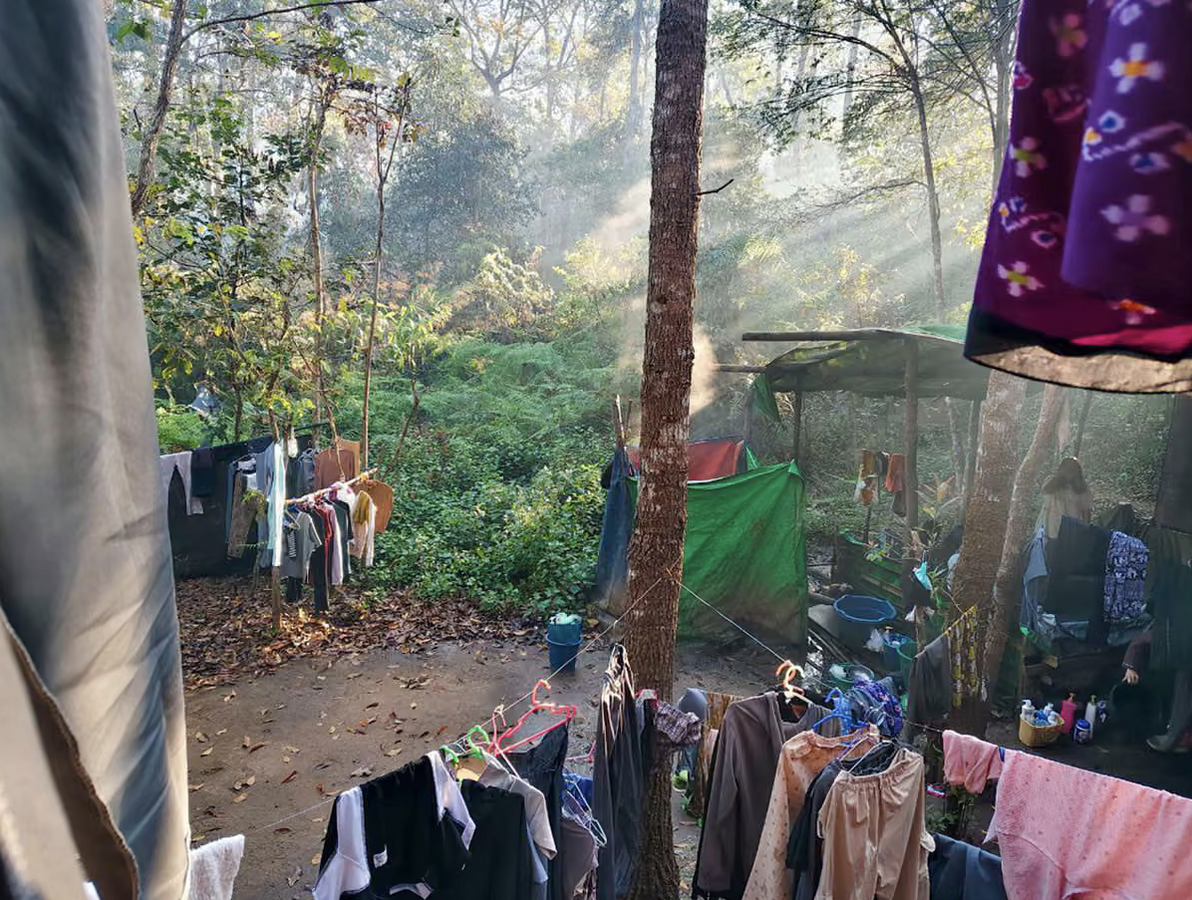
“The degree meets international standards,” Wootton says. “They don’t have clean water, they don’t have shelter, the living conditions are really basic. They are at constant risk of drone attack. They are at constant risk of air attack. We’ve had bombs land right next to the classroom.”

Source: The Guardian
Learning under fire
For students like Khun and his classmate Rosetta, studying meant constant upheaval. During one clinical placement, Khun’s training hospital was hit in an airstrike. “We had to evacuate with the patients and continue wherever we found safety,” he says.
Rosetta remembers revising for exams in temporary shelters. “There were times we could hear drones overhead. We studied quietly, afraid even to turn on lights,” she says.
Amid that danger, the Phoenix Bachelor of Nursing Science — named for the mythical bird that rises from ashes — became both a qualification and a symbol. Its founders believed that by continuing medical education, they were keeping alive an ethical healthcare system independent of military control.
“The name Phoenix is powerful for us,” Rosetta says. “It means survival. It means Myanmar can still stand for compassion.”

Source: The Guardian
Hope among the ruins
Myanmar’s humanitarian crisis shows little sign of easing. Nearly 19 million people now need assistance, and more than 3 million have been displaced, according to international agencies. Hospitals and clinics have been repeatedly bombed; medicines and supplies are scarce.
Even so, five cohorts of nursing students are now enrolled in the underground program, with others completing shorter diploma upgrades. Their trainers insist the mission is not only to educate but to restore dignity to healthcare itself.
“Every one of these graduates represents quiet resistance,” says April. “They’re rebuilding trust, one patient at a time.”
At the secret ceremony, there were no official caps, gowns, or photographs — only handshakes, quiet words of thanks, and a shared moment of relief. For the new nurses, the celebration was fleeting. Many returned that night to field clinics and mobile hospitals scattered through contested areas.
“We have faced fear, suffering, and loss,” says Khun. “But we also have dreams. We want to heal people. And we want a better Myanmar.”
*Name changed for safety.
🤔Nurses, do you have an inspirational story of how you became a nurse? Share your thoughts below.
If you have a nursing news story that deserves to be heard, we want to amplify it to our massive community of millions of nurses! Get your story in front of Nurse.org Editors now - click here to fill out our quick submission form today!