



Opportunity & Impact in Nursing Summit 2026: Where Purpose Meets Progress
As the sun dipped behind the Potomac on Saturday evening, the 2026 Opportunity & Impact in Nursing Summit came to a close at the JW Marriott in Washington, DC, only steps from the White House. What remained wasn’t just the usual conference buzz, but a clear blueprint for a profession standing in the middle of a profound transformation.
Hosted by the American Nurses Association (ANA), the three-day gathering, centered on the theme “Where Purpose Meets Progress”, pushed far beyond the typical conversations about health disparities. Instead of simply outlining what the problems are, speakers and attendees focused on how to repair systems, educate future nurses, and build structures that can actually change outcomes. The Summit made one thing unmistakably clear: nursing is no longer just the “backbone” of healthcare. It is becoming the architect of social justice, legislative reform, and global health equity.

Marion Phillips III, Equity Awards Ceremony host

Day One: An Emphasis on Equity
Momentum started early on Thursday, February 12, during a special pre-summit event for Howard University’s nursing students and faculty. Marion Phillips III delivered a stirring message about nurturing Black excellence in nursing and breaking long-entrenched cycles of exclusion. Graduate nurse Zoe Charles-Zekeri (West Coast University) shared how Phillips’s call to action landed: “The advice that stuck with me was to embrace my identity as a Black nurse and serve as a mentor for the next generation… we need more people that look like me in this field, so I should take pride in who I am and enter the profession despite the challenges.”
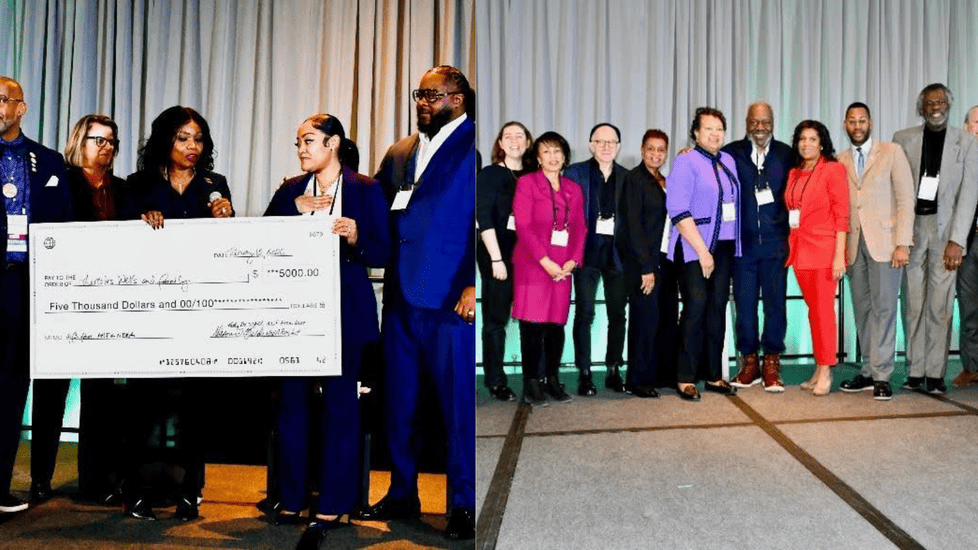
As the summit officially opened later that afternoon, the conversation shifted to the realities of life at the bedside: Mercedes Wells sat down with Dr. Lucinda Canty and Dr. Ann Kurth for an honest, at times emotional discussion about her story of maternal inequity that she faced last year when she was turned away from an ER, despite being in active labor. Her husband, Leon, who was by her side at the Summit, had to deliver their precious daughter, just seven minutes after being denied access to care. This story made nationwide news and set the stage for the urgency behind the WELLS Act, set forth by Representative Robin Kelly (IL). After sharing her story for the first time in a public forum, Mercedes and her husband were presented with a $5,000.00 monetary gift on behalf of the National Black Nurses Association (NBNA) to demonstrate solidarity and reconciliation for the trauma she endured.

The evening flowed into the Equity Awards Ceremony, hosted again by Marion Phillips III, honoring leaders who have moved equity from aspiration to measurable action. The ceremony celebrated excellence across four core categories: Dr. Bridgette M. Rice received the Health Equity Research Award for her evidence-based work in equity-minded science; Dr. Suha Ballout was honored with the Health Equity Educator Award for her inclusive curriculum design; Dr. Camille Burnett took home the Health Equity Leader Award for systems-level advocacy; and Dr. Lydia Albuquerque was recognized with the Health Equity Practice Award for direct community impact. Additionally, the summit featured a global perspective with the Health Equity Global Impact Award, presented to Agnes Nambozo, a Ugandan nurse celebrated for her heroic efforts delivering life-saving vaccines across treacherous mountainous terrain and climbing a 1,000 ft ladder to gain access to the patients in her care.
A deeply poignant highlight of the summit was the tribute to the Freedman’s Hospital nurses, who were honored for their foundational role in the history of Black nursing and health equity. In a session commemorating the ANA’s 130th anniversary, these pioneers were recognized as the "original equity champions" who provided essential care and education for African Americans during a time of extreme segregation. This legacy was further bridged to the present through a collaboration with the Howard University School of Nursing, which stands as the direct successor to the Freedman's Hospital nursing program. By honoring these historic figures alongside modern leaders, the summit emphasized that the current push for equity is built upon the courage and resilience of those who fought for inclusion more than a century ago.
The day then closed not with charts or policy briefs, but with art: Tad Worku’s storytelling and musical performance centered the humanity of the healer, a reminder that the psyche of the nurse is among the health system’s most valuable resources. Tad also emphasized that at the heart of healthcare, hope must remain.

Day Two: Disrupting Industry Status Quos
Friday morning opened with a powerful fireside chat featuring Corenza Townsend, LPN, now Chief Administrative Officer at Norton West Louisville Hospital, an LPN in a top-tier executive role whose very presence disrupts outdated hierarchies. She shared the story of helping open the first hospital in West Louisville in over 150 years, proof that when nurses lead, communities thrive. Corenza demonstrated through her actions that by challenging the longstanding hierarchy, advocacy and change will abide. “Hearing Ms. Townsend speak really inspired me to aim higher,” said Zoe Charles-Zekeri. “In ten years, I see myself as an accomplished CRNA, ideally building or running a clinic that serves my community… Before, I didn’t really have strong aspirations beyond becoming a CRNA, but now I want to aim higher and be a leader for those who come after me.”

One of the day’s most striking moments came from Theater of War: A Refutation, performed by Arliss Howard, Eric Berryman, and Frankie Faison. This production created a moment that felt both intimate and profoundly communal. As the performers brought the text to life, the room seemed to settle into a shared stillness, opening space for people to genuinely feel and not just intellectually process the themes of trauma, resilience, and moral complexity. Many attendees described the experience as unexpectedly moving, not because it was dramatic for drama’s sake, but because it reflected truths that often go unspoken in clinical, military, and caregiving environments. The reading encouraged everyone present to pause and reflect on the emotional burdens carried by their families and the professionals who support them. It also reminded us that healing is not a linear process, but a deeply human one that benefits from empathy, storytelling, and honest conversation. What made the session especially powerful was the way it broke down barriers; people who didn’t know each other walked away feeling connected through the shared experience of witnessing something real and vulnerable. In that sense, the performance did more than illustrate the challenges faced by those affected by war; it invited us to look inward and consider how we show up for one another. Ultimately, Theater of War: A Refutation became one of those rare summit moments that linger long after the event ended, continuing to spark reflection and meaningful dialogue.
The panel that followed consisted of nursing pioneers, Drs. Debra Toney, Beverly Malone, Ernest Grant, C. Alicia Georges, and Ken White, who shared their own personal experiences as nursing expert leaders who all experienced firsthand the challenges of inequities and disparities that permeated our society for years. Attendee Kevin Moore, DNP, RN, stated, “Theater of War opened a courageous conversation about moral injury. For many LGBTQ+ clinicians, that injury includes the quiet harm of identity concealment, the constant calculation: Is it safe to mention my spouse? Will my relationship be treated as equal? Is my identity “appropriate” here? For transgender and nonbinary clinicians, safety and visibility concerns are often even more acute. “Clinicians need to practice as their whole, authentic selves. Otherwise, the professional mask becomes a form of self-erasure that breeds exhaustion and steals meaning from the work.”

The afternoon closed with Lily Zheng’s masterclass on “Fixing Fairness” (2026), urging a move beyond feel-good belonging toward accountability, clarity, and structural design that actually changes outcomes. When attendee, Kevin Moore, DNP, RN, was asked about one specific policy to be fixed through accountability rather than belonging, he stated, “One hospital policy that requires immediate attention across healthcare systems is the lack of operational accountability around sexual orientation and gender identity protections in both HR and clinical systems. When nurses have to re-advocate for basic recognition at every turn, psychological safety erodes. Fairness is structural. Belonging is cultural. Both matter, but structure creates the conditions that make belonging sustainable.” He recommended the fix: “measurable standards, equity education that includes LGBTQ+ identities and intersectionality, transparent reporting systems, and consequences when bias is ignored, not as punishment alone, but as repair and learning.”
Dr. Sabrina Ali Jamal-Eddine, a health humanities nurse scientist and disability justice scholar activist at the University of Illinois Chicago, brought a critical perspective on safety and access. Speaking to the WELLS Act’s emphasis on maternal safety, she stressed that true safety must include the well-being of disabled patients: “Safety for all marginalized patients, including disabled patients, must begin with a radical commitment to humanization and trust.” She called out diagnostic overshadowing, when symptoms are attributed to a patient’s disability rather than investigated on their own terms, as a persistent source of harm that policy and practice must confront.

Reflecting on Tad Worku’s theme of the “humanity of the healer,” Dr. Jamal-Eddine (pictured right) added that the so called nursing shortage is “a manufactured crisis… rooted in hierarchical wealth accumulation whereby our government and CEOs treat healthcare as a business,” arguing that listening to disabled nurses is a powerful starting point for transforming the profession into one that sustains and honors its workforce. Dr. Sabrina also added, “We have intentional disinvestment in our workforce that has resulted in massive rates of nurse attrition. Listening to disabled nurses can serve a critical starting point for demanding systemic transformation of our profession into one that honors and sustains its workforce to become a more humanizing and sustainable profession for all of the nurses, healers, within our nation.” Reflecting on Tad Worku’s theme of the humanity of the healer, Dr. Jamal-Eddine described the “nursing shortage” as a manufactured crisis rooted in a business-first approach to healthcare and intentional disinvestment in the workforce, arguing that listening to disabled nurses is a powerful starting point for transforming conditions so nurses can stay and thrive.

Day Three: From Policy to Action
Saturday, February 14, began with Sunrise Tabletop Sessions, fast, intimate exchanges ranging from AI in rural health to the nurse’s role in climate resilience. Delaware’s first Black Speaker of the House, Melissa Minor-Brown, RN (pictured left), then brought that momentum, illustrating how nurse-legislators translate clinical reality into durable law and also policy that serves patients and clinicians alike. Attendees fanned out to sixteen concurrent sessions, including trauma-informed leadership and the HOPE (Health Outcomes from Positive Experiences) Framework, the “how-to” toolkit attendees could deploy as practical tools to use right away.
The Summit reached an emotional and political peak when Maryland Governor Wes Moore presented the 1st Inaugural ANF Health Equity Legacy Award, emphasizing that equity is a continuous legislative responsibility and signaling a future where the state becomes a proactive partner to nursing leadership. His message was clear and energizing: Equity isn’t a finish line, but a continuous legislative responsibility. He shared the emotionally charged personal story of the passing of his father when he was just three years old. His presence signaled a future in which state leadership actively partners with nurses to shape policy.
The final two speakers, Joan C. Williams, JD, and Dr. Jennifer Moon, brought the summit home. Williams offered concrete strategies to interrupt patterns of bias that quietly derail nursing careers. Dr. Moon closed with an inspiring call to action grounded in the HOPE framework: to focus not only on fixing problems, but on strengthening what already works within communities and within each other. “Before this summit, I wasn’t sure my voice would be heard,” Zoe Charles-Zekeri reflected. “But seeing proximate leaders who look like me showed me I can lead in and for my own community. I want to be that role model for young Black girls and for the Black community as a whole.”

Where Purpose Meets Progress
As attendees stepped back into the chilly Washington air on this Valentine’s Day, one truth rang clear: the nursing profession has stepped into its power. From the mentorship of students to the courage of Agnes Nambozo, from the systemic strategies of Lily Zheng to the legislative leadership of Governor Wes Moore, the Summit showcased a profession that is no longer waiting for permission to lead. The “Purpose” in nursing has always existed. What 2026 has now made evident is the “Progress”: new laws, new leaders, new structures, and a shared vision for what comes next. The nurses leaving Washington this week aren’t just participants in a conference; they are the architects of a more equitable future, equipped with tools rooted in data, storytelling, legislation, and hope.
🤔 Nurses, what part of this summit’s message resonates most with your experience? Share your thoughts in the comments below!
If you have a nursing news story that deserves to be heard, we want to amplify it to our massive community of millions of nurses! Get your story in front of Nurse.org Editors now - click here to fill out our quick submission form today!