



Why Media Ignores Nurses - How Love n’ Leary Is Changing That
Originally published on The Nursing Beat, June 12, 2024.

In 2016, over 200 nurses gathered together for a weekend-long summit to discuss healthcare problems and pitch their solutions. It was the first event of its kind, called a Nurse Hackathon.
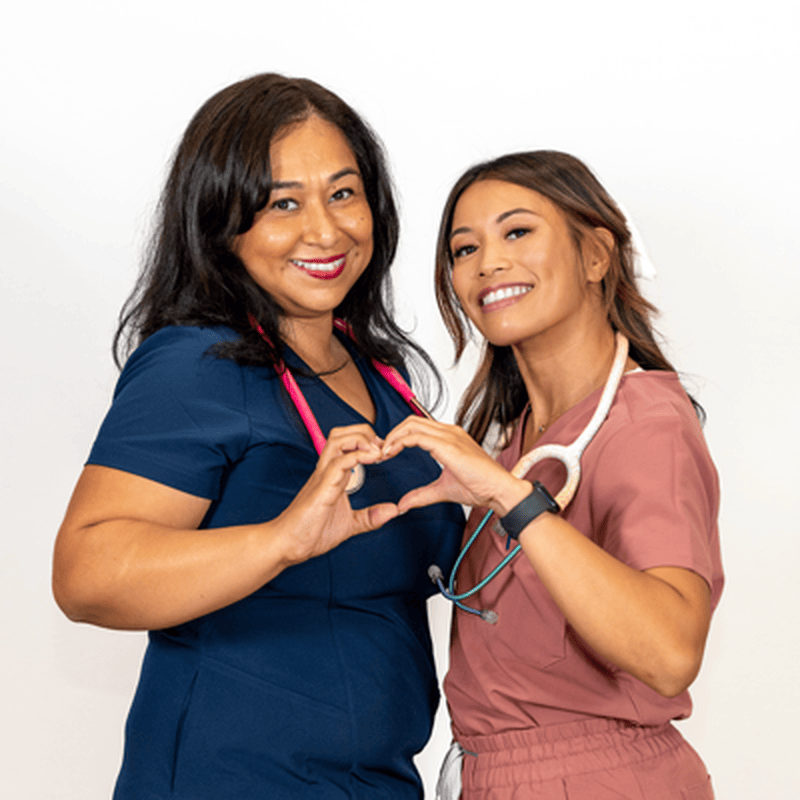
Leading the event was Rebecca Love, RN, MSN, FIEL, the Director of Nurse Innovation & Entrepreneurship in the United States at Northeastern School of Nursing at the time. Also attending the event was Marion Leary, PhD, MPH, RN, now the Director of Innovation at the University of Pennsylvania's School of Nursing.
These two nurse innovators crossed paths, and nearly a decade later, they proudly co-host the Love n’ Leary podcast.
Stay tuned for the (re)launch of the "Love n' Leary Nursing Podcast" in early 2026 as part of Nurse.org's podcast platform.

Starting the Podcast
“We had no plans of this turning into a podcast,” Love clarifies. “We did that first episode because I think a lot of people think Marion and I have something figured out.”
Both Love and Leary wanted to show that all nurses can use their platform to speak up for and about the profession if they choose.
The Love n’ Leary podcast covers a wide array of topics, but there are a few common threads that Love and Leary continue to share:
- Nurses need to innovate
- The media needs nurses
- Nurses don’t need to have imposter syndrome about innovating or making their voices heard in the media
Nurses Need to Innovate
The World Health Organization recognizes healthcare innovation as a “new or improved solution with the transformative ability to accelerate positive health impact.” Yet, the idea of innovation in nursing remained mostly unexplored until the 2010s. Now, we have Nurse Hackathons and innovation curricula in nursing schools, thanks to individuals like Love and Leary, who helped spearhead this movement.
“There are nurses who innovate every day at the bedside, but it’s not always something we’ve taught in a rigorous and methodical way in nursing school,” Leary says.
Love says college business classes encourage students to think in small groups and devise solutions to problems. Yet, nursing school seldom takes this approach. Policies and procedures grounded in evidence-based practice are a core tenet of nursing, but nurses are not typically taught how to innovate and take risks safely.
“I’m hoping that the profession is changing,” Leary says. Leary's work at Penn Nursing focuses on teaching nursing faculty, students, health system leaders, and clinicians to think about systematic solutions to problems they encounter in nursing.
One constant about healthcare: it constantly changes.
Nurses can passively accept innovations imposed on them, or they can push to the forefront, creating new products and systems.
Popular Online RN-to-BSN Programs

Chamberlain University is the #1 largest school of nursing with a community of more than 177,000 students, faculty, and alumni. The school offers BSN programs online and has a long history of successfully delivering top quality education. Save up to 30%* on tuition with the RN-to-BSN Tuition Advantage Grant (*see Chamberlain website for details).
 CCNE
CCNE
 Online
 RN Required
Enrollment: Nationwide except CT, NY, RI

When you earn an ASU nursing degree, you are gaining skills from a respected and accredited institution. Our online nursing degrees are accredited by the Arizona State Board of Nursing and the Commission on Collegiate Nursing Education.
CCNE
Online
RN Required
Enrollment: Nationwide

GCU’s RN-BSN program is tailored to meet the needs of the RN adult learner and to maximize the strengths that the working RN already possesses. Transfer up to 90 credits and earn a BSN in as little as 12 months. GCU’s online classes allow you to study at the times that work for your schedule while still enjoying a close connection with your classmates and instructor via online discussions.
CCNE
Online
RN Required
Enrollment: Nationwide

Walden’s online programs for nursing meet rigorous standards for academic quality and integrity, and 100% of our College of Nursing didactic faculty are doctorally trained. With multiple degree completion options, you can choose a bachelor’s in nursing path that makes sense for your busy, unpredictable schedule.
CCNE
Online
RN Required
Enrollment: Nationwide, excluding CT, ND, NY and RI. Certain programs have additional state restrictions. Check with Walden for details.
Our affordable, accelerated online nursing programs at St. Thomas University are designed to help you achieve your goals – equipping you with the resources and support you need to progress and succeed as a leader in nursing.
CCNE
Online
RN Required
Enrollment: Nationwide
The Media Needs Nurses
The media needs nurses, and nurses need the media, too.
In fact, the newsroom and the nursing profession could have a very symbiotic relationship. The most trusted profession could offer its social capital in exchange for more thoughtful coverage of the nursing shortage, strikes, and the power nurses wield in healthcare.
“I think you see any health problem, pandemic, or environmental crisis, and physicians are constantly being consulted about what’s going on. They’re the go-to. Major news organizations have physician correspondents,” says Love. “Where are the nurses?”
The media chronically underuses nurses for several reasons:
- Healthcare revenue systems. Health systems see physicians as revenue-generating and nurses as a cost that hits an organization’s bottom line. This sentiment might come into play when healthcare organizations consider which faces to put out into the media and how they attract patients.
- Employment structure. Even though many physicians work as full-time employees for healthcare organizations, they are viewed somewhat as independent contractors, free to speak as they please. Nurses are seen as representatives of their hospital systems, so speaking out is seen as an institutional betrayal. Leary says, “Health systems oftentimes silence nurses, and so don't let them have a voice, especially in areas where they're the experts.”
- Lack of media training. There are few media-trained nurses. Nurse entrepreneurs may have picked up the skill, but few organizations are investing in the media training of nurses. “I talk to nurses all the time who feel like they want to be more active and vocal, but I think some nurses don't know even where to begin,” Leary adds.
“It’s not only important that nurses get into the media as a strategy, but when nurses get involved, it starts the process of writing and documenting nursing history. If we’re absent from media, those stories get erased over time.”
-Rebecca Love, RN, MSN, FIEL
Popular Online Master of Science in Nursing (MSN) Programs
SponsoredFeatured SchoolChamberlain University is the #1 largest school of nursing with a community of more than 177,000 students, faculty, and alumni. Chamberlain offers BSN, MSN, NP and DNP programs online and has a long history of successfully delivering top quality education.
AccreditationLocationPrerequisiteEnrollment: Nationwide except CT, NY, RI
GCU's College of Nursing and Health Care Professions has a nearly 35-year tradition of preparing students to fill evolving healthcare roles as highly qualified professionals.
AccreditationLocationPrerequisiteEnrollment: Nationwide

Whether you’re taking the first steps toward a nursing degree, seeking to advance as a nurse or want to hone your craft with specialized study, there’s a path for you at Purdue Global’s School of Nursing. Our programs were designed so that you can easily balance your lives at home and work with school - without sacrificing the rigor and cutting-edge curriculum of a quality nursing education.
AccreditationLocationPrerequisiteEnrollment: Nationwide, but certain programs have state restrictions. Check with Purdue for details.

Earn your nursing degree from one of the largest nursing education providers in the U.S. Walden University’s BSN, MSN, post-master’s APRN certificate, and DNP programs are accredited by the Commission on Collegiate Nursing Education (CCNE). Get enhanced practicum support with our Practicum Pledge.
AccreditationLocationPrerequisiteEnrollment: Nationwide, excluding CT, ND, NY and RI. Certain programs have additional state restrictions. Check with Walden for details.

The Berkley School of Nursing at Georgetown University is one of the world’s leading academic and research institutions, and the university has been delivering graduate nursing programs in a distance-learning environment since 2011. The university's online programs allow students to learn from wherever they are while they pursue an accredited, mission-driven nursing education that will allow them to deliver high-quality care.
AccreditationLocationPrerequisiteEnrollment: Nationwide, excluding NY and WA.
Nurses Can Ditch Imposter Syndrome
Why is it so hard for a nurse to innovate, branch out, build a business, or speak out in the media?
Taking such a risk can feel very uncomfortable, Love says. “The first step in a journey is always just to get started. Your first post is going to get no likes or very few. Maybe just your closest loved ones. It’s like anything else in life, you have to put in the work.”
If you feel any urge to grow your nursing career in an unconventional way or be more outspoken about nursing issues that light your passion, don’t forget:
- You are trusted
- You are educated
- Your career goals are valid and attainable
- You are a professional
- Your voice is worth being heard
Think about the well-known nurses and nurses in the media you choose to engage with. They’re probably not the ones playing it safe, Love says. So, it does feel risky, but risk can equal impact. Risks instigate change.
Final Thoughts
If Love and Leary look back on their podcast in a few years, what would have happened to convince them it was a success?
- Nurses feel more confident in using their voices
- Nurses are engaging in politics and civic engagement
- Nurses feel comfortable speaking with the media
Stay tuned for the (re)launch of the "Love n' Leary Nursing Podcast" in early 2026 as part of Nurse.org's podcast platform.