




Trailblazing Nurse and Civil Rights Leader Thelma Gibson Dies at 99

- Thelma Gibson, a trailblazing Miami nurse and civil rights advocate, died at 99, leaving behind a legacy of leadership in healthcare and community change.
- She broke racial barriers at Jackson Memorial Hospital and rose to public health leadership in Miami-Dade.
- Gibson extended her impact beyond nursing through economic development, women’s business leadership, and community health initiatives.
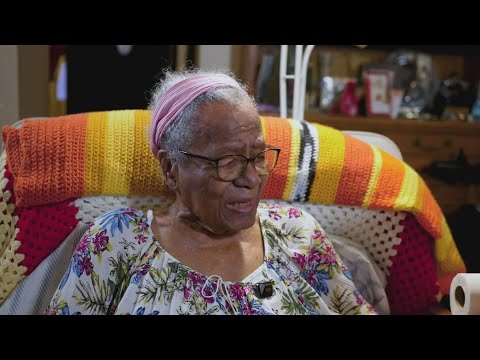
Images — Left (Forbearance: Thelma Vernell Anderson Gibson: the life story of a Coconut Grove native.) Right (Kevin Arrieta/VACO)
Miami has lost one of its brightest lights. Thelma Vernell Anderson Gibson, a nurse, civil rights advocate, and longtime Coconut Grove community leader, has died at 99. She passed away Feb. 11 at her home, surrounded by loved ones and a priest, according to her niece, Misty Brown.
Her family called her “a community champion” in a statement after her death, reflecting the wide impact she had across Miami‑Dade County.

Born in 1926 on Charles Avenue in Coconut Grove, Gibson grew up in what is now known as “Little Bahamas.” Her mother pushed her and her siblings to focus on education so they would not have to depend on low‑paying domestic work. At 17, she left home to attend nursing school, starting what became a lifetime of service in healthcare and the community.
Breaking Barriers in Nursing
After graduating in 1947, Gibson was hired at Jackson Memorial Hospital, where she was among the first Black nurses on staff. When she arrived, she was told she could not work in the operating room because of segregation and was instead assigned to the hospital’s “colored floors.”
She did not walk away. Instead, she stayed, learned, and built a nursing career that spanned more than three decades. She later became the first Black assistant supervisor of nursing at the Dade County Health Department, a milestone that reflected both her skill and her persistence in a segregated system.
Gibson often spoke about caring for others as her purpose and treated nursing as a calling to serve, not just a job.
A Lifetime of Advocacy and Community Leadership
Gibson’s influence stretched far beyond the hospital. With her husband, the late Reverend Theodore Gibson, a pastor and activist who helped lead desegregation efforts in Miami’s public schools, she worked to advance civil rights and expand opportunities for Black residents in Miami‑Dade.
After race riots devastated Liberty City in the early 1980s, the Gibsons helped launch Black Investors of Dade County to support economic recovery and investment in Black neighborhoods.
She later founded the Thelma Gibson Health Initiative (TGHI), a nonprofit aimed at improving health outcomes by addressing issues like mental health, HIV and substance use, housing, education, and economic stability in underserved communities.
Following her husband’s death, she created the Theodore Gibson Memorial Fund to bring together the diverse communities of Coconut Grove. The fund helped lead to the opening of Gibson Plaza Community and Educational Center, which includes senior living and youth‑focused STEM programs.
Gibson was deeply involved in efforts to preserve Black history and culture in Coconut Grove. Working with local development and community groups, she pushed for affordable housing, youth programming, and the protection of the neighborhood’s Bahamian heritage.
Even with all of these roles and titles, she often downplayed her own importance, focusing instead on the people and neighborhoods she served.
Champion for Women and Inclusion
Gibson was also committed to bringing women together across race and background. In 1984, she founded the Miami‑Dade Women’s Chamber of Commerce, with a vision that was intentionally inclusive.
“We’re going to have a women’s chamber of commerce, and it’s not going to be just Black women. It’s going to be Black and White and Hispanic, that’s how we started the Women’s Chamber of Commerce of Dade County,” she said in an interview with CBS News Miami.
Through the chamber and her broader civic work, she encouraged women to build businesses, lead organizations, and support each other in public life.
Legacy Highlights
- Nursing trailblazer who broke color barriers at Jackson Memorial Hospital and in county public health leadership.
- Co‑founder of Black Investors of Dade County to support economic rebuilding after the Liberty City unrest.
- Founder of the Thelma Gibson Health Initiative, focused on mental health, HIV, substance use, housing, and jobs in underserved communities.
- Founder of the Theodore Gibson Memorial Fund, which helped create Gibson Plaza and expand youth STEM and senior housing opportunities.
- Founder of the Miami‑Dade Women’s Chamber of Commerce, bringing women of different races and backgrounds together in business.
- Lifelong advocate for affordable housing, youth programs, and preservation of Black heritage in Coconut Grove’s “Little Bahamas.”
- Honored locally with a designated “Thelma Gibson Day” in Coconut Grove for nearly a century of service.
Key Moments in Her Life
- 1926: Born on Charles Avenue in Coconut Grove, Miami.
- 1940s: Leaves home at 17 to attend nursing school during a time of both nurse shortages and strong barriers for Black students.
- 1947: Begins work at Jackson Memorial Hospital and is assigned to segregated “colored floors” instead of the operating room.
- 1950s–1970s: Builds a three‑decade nursing career, ultimately becoming the first Black assistant supervisor of nursing at the Dade County Health Department.
- Early 1980s: Co‑founds Black Investors of Dade County after the Liberty City riots to boost economic opportunity in Black communities.
- 1980: Retires from nursing but continues her public service and community work.
- 1984: Founds the Miami‑Dade Women’s Chamber of Commerce.
- 2000s and beyond: Develops the Thelma Gibson Health Initiative and the Theodore Gibson Memorial Fund, leading to Gibson Plaza and expanded youth STEM efforts.
- December 19 (year proclaimed): Recognized with “Thelma Gibson Day” in Coconut Grove.
- Feb. 11, 2026: Dies at home at age 99.
Why This Matters For Nurses
Thelma Gibson’s life shows how bedside care and community change can move together.
- She began her career when Black nurses faced severe limits in training and practice, yet rose into leadership and helped widen the path for others in the profession.
- Through the Thelma Gibson Health Initiative, she focused on mental health, HIV, substance use, housing, and jobs, all social factors that nurses still see shaping patient health every day.
- Her example encourages nurses to know local community resources, support equity in their own workplaces, and look for ways to lead beyond the bedside, through mentoring, advocacy, or community partnerships.
A Humble Leader Remembered
Even as recognition grew, Gibson stayed grounded. Last December, just before her 99th birthday, she told the Miami Herald, “The fact that God let me live this long is all that I’m really thankful for and the fact that I’ve been able to do whatever I could to help make change take place. But recognition is not something I’m looking for.”
Recognition still found her, from official honors like Thelma Gibson Day to the many people who called her the “godmother of Coconut Grove.” For nearly a century, she worked as a nurse, organizer, and advocate, always standing up for inclusion, opportunity, access to healthcare, and civil rights.
For nurses and the broader community, her life is a reminder that one person’s commitment to service can help move an entire city forward.
🤔Nurses, what lessons from Thelma Gibson’s career resonate most with you? Share your thoughts in the discussion forum below!
If you have a nursing news story that deserves to be heard, we want to amplify it to our massive community of millions of nurses! Get your story in front of Nurse.org Editors now - click here to fill out our quick submission form today!