




A 10-Hour Wait After Calling 911? Seattle’s Ambulance System Raises Alarming Questions
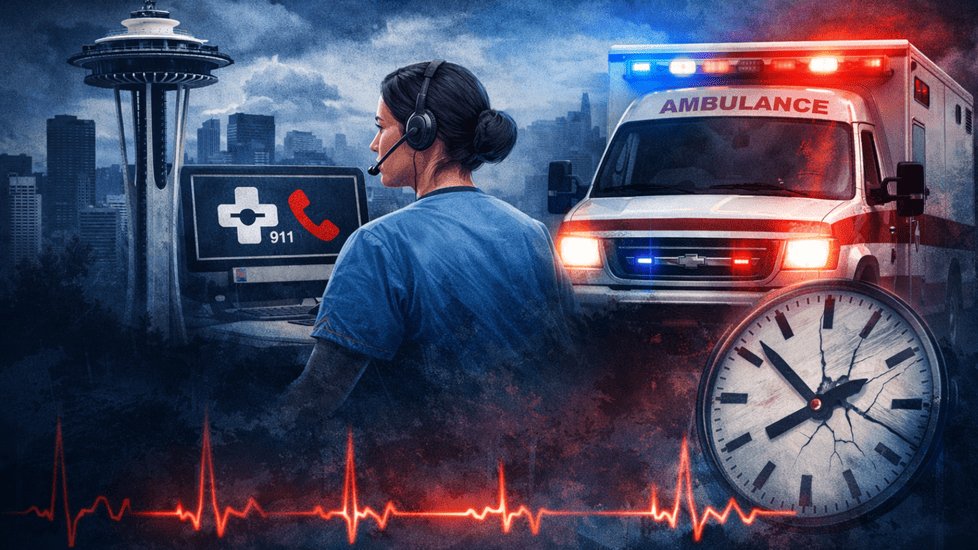
- Seattle’s 911 system is under review after concerns that patients routed through a nurse triage line experienced ambulance delays without consistent response-time tracking.
- Some nurse-ordered ambulance transports may fall outside standard oversight metrics, raising questions about accountability and system performance.
- The situation highlights how emergency system design can impact both patient outcomes and the role of nurses working in triage-based care models.
Nurses on 911 triage lines are now at the center of a growing debate as concerns emerge over ambulance delays, limited oversight, and accountability gaps in Seattle’s emergency response system. Recent investigations into the city’s 911 medical system have raised serious questions about how a contractor-operated nurse triage line may be associated with delays in care for some callers, while also operating outside of the same response-time standards patients expect when they call 911. At the core of the issue is a contract design that reportedly exempts certain nurse-ordered ambulance responses from standard tracking and penalties, creating what reporting and industry experts have described as a potential blind spot in a life-safety system.

A system built to relieve pressure, not create it
Seattle implemented a nurse triage program through its ambulance contractor, American Medical Response (AMR), to help manage rising call volumes and reduce strain on emergency departments and EMS crews. Under this model, some 911 callers are routed to a nurse who assesses their condition and determines the next step. The intent is to keep ambulances available for higher-acuity emergencies while guiding lower-acuity patients to options such as telehealth, clinics, or delayed transport.
Programs like this are used in other systems and can help improve resource allocation when implemented with appropriate safeguards. Early data showed that a portion of these calls were redirected away from emergency departments, helping reduce overcrowding and preserve critical resources. City officials and the contractor continue to maintain that the system is designed to improve efficiency and better allocate limited resources.
Where concerns are emerging
The concern is not the concept of nurse triage, but what happens after the clinical decision is made. Recent reporting has highlighted that patients routed through the nurse line are not always held to the same ambulance response-time standards as traditional 911 calls. In some cases, a nurse may determine an ambulance is needed, but the system does not consistently track how long it takes to arrive.
For thousands of patients each year, this may create a potential gap between clinical decision-making and actual care delivery. In at least one documented case, that gap stretched into many hours.
A case drawing attention
One case that has drawn attention involves a lawsuit filed by the estate of a Seattle patient who reportedly waited more than 10 hours for an ambulance after calling 911. The case has raised questions about how triaged calls are handled and monitored within the current system.
City officials and the ambulance contractor have denied liability, stating it is unclear whether the delay contributed to the patient’s death. Because the city does not consistently track response times for some nurse-directed transports, it remains difficult to determine how frequently similar delays may occur or how they affect outcomes.
A blind spot in a system built on response times
Response time is a key performance measure in emergency care systems. Experts have raised concerns that Seattle’s current model may create a two-tier structure, where some patients are subject to strict response-time tracking while others are not. When nurse-ordered ambulance responses fall outside standard tracking and reporting, it can limit visibility into system performance and make it more difficult to identify or address delays.
Healthcare systems rely heavily on data to evaluate and improve care delivery. Without consistent measurement, gaps in response may go unrecognized. Local leaders have indicated they plan to review the system, including oversight, contract structure, and whether additional safeguards are needed.
Nurses are making the call—but not controlling the outcome
Nurses working in triage roles are doing exactly what they are trained to do—assess risk, prioritize care, and make clinical decisions based on the information available. However, triage decisions depend on the system’s ability to carry them out. When a nurse determines that a patient needs an ambulance, that decision assumes the system will respond within an appropriate timeframe. When response times are not consistently tracked or enforced, a disconnect can occur between clinical judgment and patient outcomes.
Concerns raised in Seattle are focused on system design and oversight rather than individual clinicians.
What this means for nurses and patient care
For nurses, this situation highlights how clinical decision-making is increasingly shaped by system design, protocols, and resource constraints. Triage nurses are making high-stakes decisions with limited information, often without visual assessment, vital signs, or the ability to reassess in real time. When systems lack safeguards such as response-time tracking or escalation protocols, it may increase pressure on clinical judgment.
It also raises broader questions around accountability when delays occur after appropriate clinical decisions have been made. For patients, nurse triage lines can improve access to care and reduce unnecessary emergency department visits. However, without strong oversight, clear response expectations, and escalation pathways, delays in care may introduce potential safety risks.
Other systems have demonstrated that nurse-led triage can be effective when paired with consistent tracking, integration, and clearly defined safeguards.
The bottom line
Nurse-led triage is not the issue. The question is whether the system surrounding it is structured to support safe and timely care. Seattle’s situation highlights the importance of aligning clinical decision-making with system accountability. When response times are not consistently measured or monitored, both patients and clinicians may be affected by gaps in care delivery.
🤔Nurses, what would you do if your patient—or your loved one—waited hours after calling 911?
Share your thoughts below.
If you have a nursing news story that deserves to be heard, we want to amplify it to our massive community of millions of nurses! Get your story in front of Nurse.org Editors now - click here to fill out our quick submission form today!