




Poll: 94% of Nurses Say Eliminating Nursing Home Staffing Rules Will Harm Patient Care
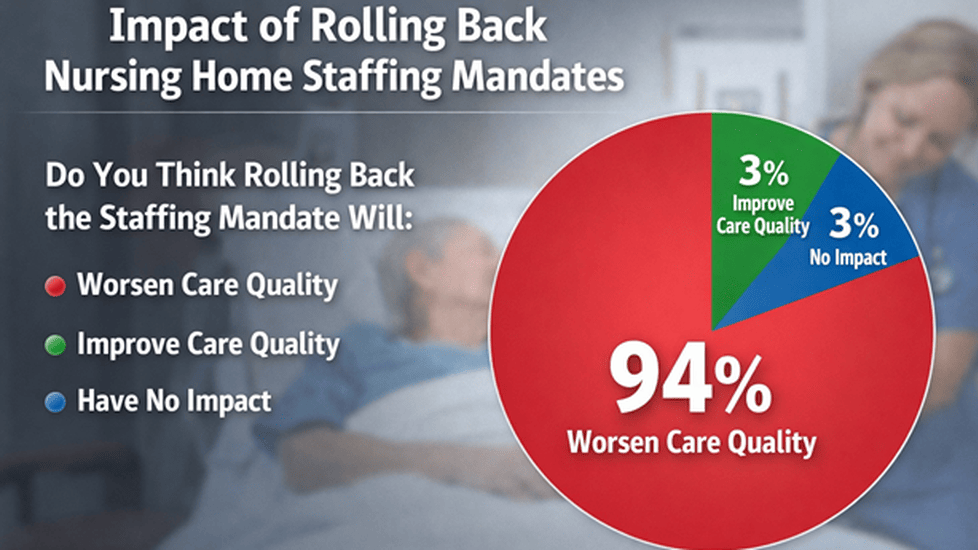
- Nearly all nurses warn of patient harm: 94% of nurses say eliminating nursing home staffing requirements will worsen patient and resident care quality.
- Staffing rollbacks would intensify nurse burnout: 84% of nurses expect increased workload and stress if minimum staffing standards are removed.
- Strong support for national standards remains: 86% of nurses support a national minimum staffing requirement, with most prioritizing staffing minimums and better pay to improve long-term care.
As federal officials move to eliminate proposed long-term care staffing requirements, nurses across the country are raising serious concerns about how the change could affect both patient safety and working conditions in nursing homes.
A recent Nurse.org poll* of 262 nurses asked respondents how they believe the elimination of the nursing home staffing mandate will impact resident care, nurse workloads, and the future of long-term care staffing standards. The results reveal overwhelming concern from frontline nurses.

Most Nurses Say Patient Care Will Worsen
When asked how eliminating minimum staffing standards would affect patient and resident care quality in nursing homes, nearly all nurses predicted negative consequences.
- 94% said the rollback is likely to worsen patient/resident care quality
- 3% believe it will improve care quality
- 3% expect no impact
These results suggest that nurses largely view minimum staffing standards as essential to maintaining safe and effective care in long-term care settings, particularly for vulnerable elderly populations and those with complex medical needs.
Nurses Expect Increased Workload and Stress
Concerns weren’t limited to patients. Nurses also anticipate that the staffing rollback will directly affect their working conditions.
- 84% said the rollback will increase nursing workload and stress
- 13% believe it will decrease workload or stress
- 3% expect no change
For many long-term care nurses, staffing shortages already contribute to burnout, missed care, and moral distress. Poll respondents overwhelmingly indicated that removing minimum staffing requirements could intensify these challenges.
Strong Support for National Staffing Standards
Despite the rollback, nurses remain clear about what they believe is needed to improve long-term care.
When asked whether there should be a national minimum staffing standard for long-term care, the majority of nurses expressed strong support:
- 86% support a national minimum staffing standard
- 8% are unsure
- 6% oppose a national standard
This strong consensus highlights nurses’ belief that consistent, enforceable staffing requirements are critical to protecting both residents and healthcare workers—regardless of state or facility.
What Nurses Say Should Be Prioritized
The poll also asked nurses to select TWO measures they would prioritize to ensure safe, high-quality long-term care nursing. The top responses point to systemic solutions rather than short-term fixes:
- National staffing minimums – 67%
- Better nurse recruitment and retention (higher pay and benefits) – 60%
- Improved training and staffing flexibility – 26%
- More RN hours and RN presence (rather than increased reliance on CNAs) – 24%
- Stronger state oversight and regulation – 18%
These findings suggest that nurses see staffing challenges as multifaceted—requiring regulatory standards, competitive compensation, and stronger clinical support models.
The Bottom Line
These poll results make one thing clear: nurses overwhelmingly oppose the rollback of long-term care staffing requirements and believe it puts both patients and nurses at risk.
As policymakers debate the future of nursing home regulations, frontline nurses are calling for national standards, better pay, and adequate RN staffing to ensure residents receive the safe, dignified care they deserve.
🤔Nurses, what do you think about these results? Share your thoughts below.
If you have a nursing news story that deserves to be heard, we want to amplify it to our massive community of millions of nurses! Get your story in front of Nurse.org Editors now - click here to fill out our quick submission form today!