



Virtual Reality and 'Septic' Mannequins: Colleges Go Hi-Tech to Prep Nursing Students
- Nursing schools are using technology to train nursing students for real-world scenarios.
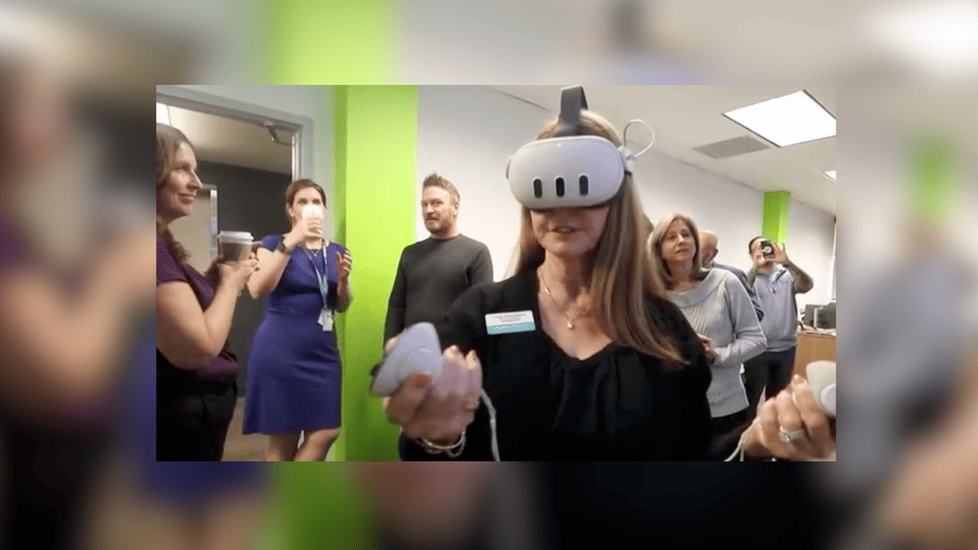
- Some schools are building entire virtual reality labs that let students practice 'hands-on' learning.
- Others have incorporated mannequins they can control remotely to allow students to adapt and learn in real time.
In a world of artificial intelligence evolving at the speed of light, it only makes sense to incorporate some advanced technology into the nursing world.
Colleges around the country are stepping up to incorporate more tech-based tools, from virtual reality to video debriefings, into their nursing student education.

Virtual Reality for Nursing Students
While it's not AI, Florida SouthWestern State College (FSW) is incorporating the world of virtual reality to allow its nursing students to practice hands-on simulated nursing care without the need (or risk) of real in-person patients.
The college has an entire virtual reality lab for nursing students that lets them "care" for patients in a variety of situations. Students slip on a headset and enter a patient's room, following all of the required steps and protocol.
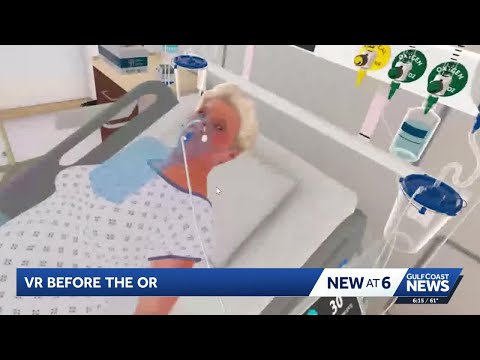
“In terms of just going into a room and checking on a patient, this is just so accurate,” one participant described.
Students say the advantage of a virtual reality nursing simulation is that it allows them to physically carry out tasks, syncing that muscle-memory connection and allowing for deeper understanding. Some schools, especially those without access to physical clinical sites, may have students complete computer modules for patient simulations, but students find it hard to learn with computer-only-based learning.
"When I was in school, they had simulations, but it wasn’t where you are physically doing it,” Olnise Exaiver, RN, explained. “You were sitting down at a computer and going through the experience — not immersed — where you are actually feeling the whole thing.”
From an educator's perspective, the virtual reality simulation also allows students the chance to make mistakes—critical for learning from—that won't ever put a real patient at harm.
Hands-on Learning with 'Septic' Mannequins
Other schools are incorporating technology with 'live' mannequins that can act like real-world patients.
For instance, Missoula College in Montana introduced a mannequin that instructors can program with different patient scenarios, from having a severe diabetic reaction to going septic.
Nursing students interact in real-time with the 'patient' and have to react as the situation unfolds before them.
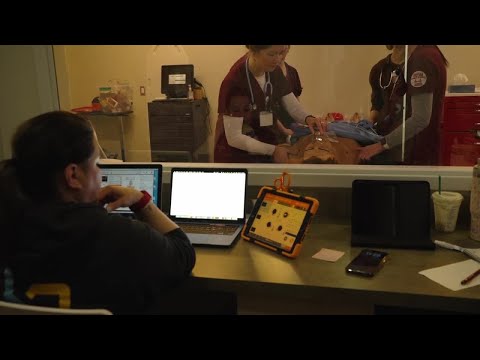
Instructors explain that a controlled mannequin simulation provides students the opportunity to see scenarios they may not get to experience in nursing school. You can't exactly predict if a patient will have an emergency or go septic in order for nursing students to gain that care experience in clinicals, but with the push of a button, the instructors can make their mannequin do just that.
“It's like more of a really focused learning situation, whereas when they go to the hospitals, they might, you know, kind of sit around a little bit and not get to see some of these real intense situations,” one instructor explained.
What This Means for Future Nurses
Most studies show that simulation‑based learning improves students’ confidence and clinical skills, but some researchers still question how well that confidence carries over to unpredictable real‑world situations.
More studies may be needed, but hopefully, as nursing education progresses, a mix of real-world and simulated models will help ensure student success for real-world practice.
🤔Nurses and nursing students, what do you think about this? Share your thoughts below.
If you have a nursing news story that deserves to be heard, we want to amplify it to our massive community of millions of nurses! Get your story in front of Nurse.org Editors now - click here to fill out our quick submission form today!