



Two Nurses Created a Hands-Free Solution for Open-Heart Surgery Recovery
- Two Sanford Health nurses created a wearable sternum protector to support patients recovering from open-heart surgery.
- The device was developed after observing limitations of the traditional pillow method used after sternotomy.
- The innovation highlights the growing role of nurses in frontline-driven healthcare solutions.
When Dale Rollag returned home after open-heart surgery, he encountered a common challenge faced by many cardiac patients: protecting a healing sternum while performing everyday activities.
Like most patients recovering from a median sternotomy, he was advised to hold a pillow or blanket firmly against his chest when coughing, sneezing, or standing up. While simple, the method can be difficult to manage consistently throughout the day.
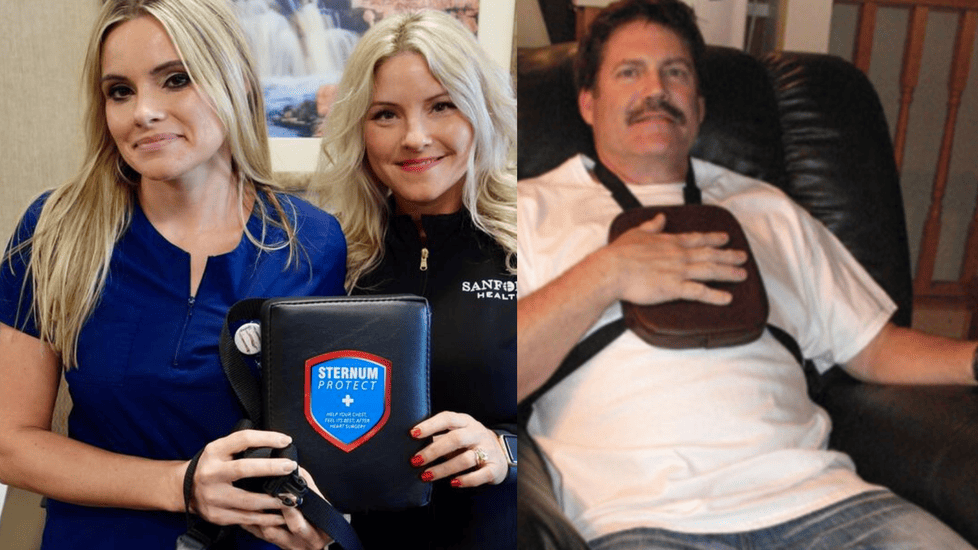
Watching their father struggle with dropped blankets and limited mobility, his daughters, Angel Rollag Bonacker and Amanda Rollag, both nurses at Sanford Health, began looking for an alternative.
Their solution became the Sternum Protector, a wearable device designed to provide consistent chest support during recovery.

Challenges With Traditional Sternotomy Support
Following Dale Rollag’s open-heart surgery at Sanford Hospital, he was instructed to use a blanket to brace his chest during movements such as coughing, sneezing, or laughing. This is a common postoperative practice intended to stabilize the sternum after a median sternotomy and reduce pain with movement.
However, the approach proved difficult in practice, requiring patients to keep a pillow within reach at all times. This can limit mobility and reduce independence, particularly when patients need both hands for daily tasks. While other specialized post‑sternotomy supports and vests exist, many patients are still discharged with only a pillow or blanket as their primary means of chest support.
According to his daughters, Dale nearly tripped multiple times while attempting to hold the blanket and use his walker in the hospital. The blanket frequently slipped to the floor, raising concerns about cleanliness and infection risk when reused. At one point, a chest tube collection box wrapped inside the blanket fell and injured his foot.
During his approximately six-week recovery period, Dale experienced pain, weakness, coughing episodes, and shortness of breath, all common during sternotomy recovery. Observing these challenges led Angel and Amanda to explore whether a hands-free alternative could improve safety and comfort during recovery.
From Prototype to Product: Honoring a Legacy
Motivated by their father’s experience, Angel and Amanda collaborated with him to create an early prototype of what would become the Sternum Protector. The initial design was a wearable chest pad intended to remain securely in place throughout the day, allowing patients to apply pressure when needed without relying on loose materials.
They report that the prototype improved stability and ease of movement during his recovery.
Tragically, Dale died in an automobile accident in 2020 before seeing the broader development of the product. His support and enthusiasm for the idea became a driving force behind the sisters’ continued work.
For Angel and Amanda, what began as a personal effort to improve their father’s recovery evolved into a product designed to support cardiac patients more broadly.
The sisters say that, in their own research, they did not find a similar hands‑free sternotomy support pad in their practice setting.
Today, the Sternum Protector is manufactured in Sioux Falls and distributed through Sanford Health locations.
Expanding Access
The device is currently manufactured in Sioux Falls through their family-operated industrial sewing business. The product line has since expanded to include pediatric sizes for children recovering from cardiac surgery.
Congenital heart defects remain among the most common birth defects in the United States, and pediatric sternotomy recovery presents similar support challenges.
Nurses as Innovators
This development highlights the role nurses can play in identifying gaps in patient care. Nurses frequently observe challenges during recovery and are uniquely positioned to recognize opportunities for improvement.
As healthcare continues to evolve, nurse-led innovation will continue to play a growing role in patient care improvement efforts.
🤔Nurses, what do you think about this? Share your thoughts below.
If you have a nursing news story that deserves to be heard, we want to amplify it to our massive community of millions of nurses! Get your story in front of Nurse.org Editors now - click here to fill out our quick submission form today!