



ER Nurse Hannah Cvancara Leads the Fight for Amputees’ Right to Serve
- ER nurse Hannah Cvancara passed all military fitness standards but was disqualified solely for having a prosthetic leg.
- She helped drive the Hannah Cvancara Service Act, a bill pushing for qualified amputees to receive an equal path to military service.
- Her advocacy led to the first congressional recognition that amputees deserve a fair, ability-based evaluation for military roles.
Image source: LinkedIn
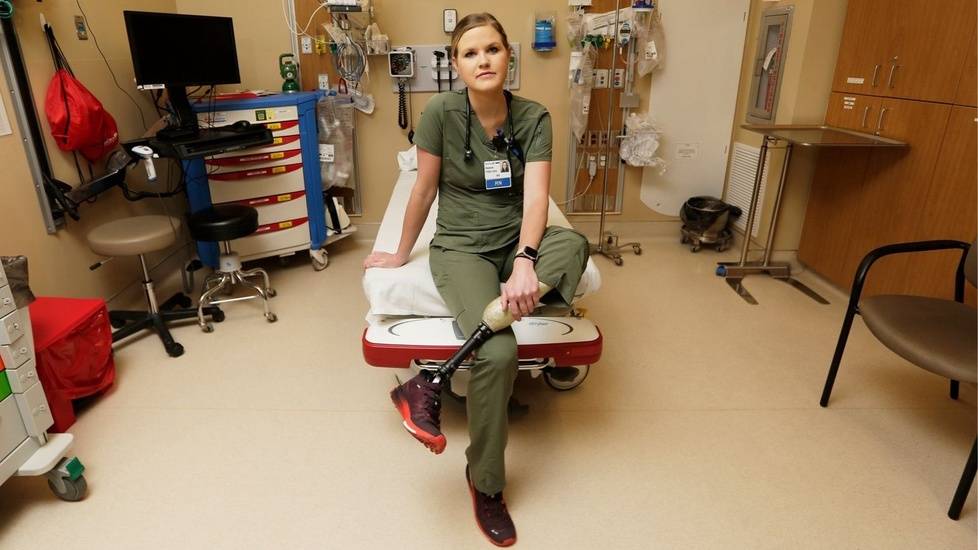
Hannah Cvancara is a dedicated emergency room nurse from Spokane who has spent years quietly defying expectations. She snowboards, rock climbs, backpacks, plays volleyball and embraces a lifestyle many would consider adventurous, all while living with a prosthetic leg.
Cvancara was born with a rare congenital condition called fibular hemimelia. Below-the-knee, her left leg didn’t develop properly, and she underwent amputation when she was about one year old.
Despite that challenge, she never let it define her limits. Once she became a registered nurse (BSN, RN), she dreamed of combining her medical training, love of service and her personal and familial background to serve in the military as a flight nurse.

A Barrier Rooted in Outdated Standards
In 2021, Cvancara began the process of enlisting — as an officer, in a medical role. She passed the physical readiness tests with flying colors: she did 30 push-ups, held a 2:30 minute plank, and completed a 1.5-mile run in 13:29 — all well above the standards.
Her medical record was otherwise clean, but that prosthetic leg became a non-negotiable disqualifier. The military’s policy for civilian amputees simply excluded her from service — and there was no waiver process for someone like her.
In her own words: “I’ve been wanting to serve in the military as a flight nurse for four years now … but … I’m missing a leg.”
That’s when she decided to fight — not just for herself, but for others with a similar story.
The “Hannah Cvancara Service Act”
Cvancara teamed up with her congressional representative to introduce the Hannah Cvancara Service Act. This bill proposes that amputees, and potentially others with physical disabilities, be allowed to serve in the military as long as they can pass all standard fitness requirements without accommodation.
In an interview with TheNursingBeat.com, she explained: “I am very passionate about those with disabilities being given an equal chance for anything in life without pushback or fear that they won’t be able to perform adequately. I consider military service an honor and duty necessary for our country’s future. I don’t believe anyone should be excluded from that opportunity if they can pass all required tests, regardless of their physical disability.”
As her prosthetist told CBS News, the original rulebook was drawn up “back when prosthetics were made out of wood and leather.” He noted that she is "more able-bodied than most people that we come in contact with every day."
The legislation is not about lowering standards or asking for special treatment. Instead, it’s about recognizing a person’s ability rather than rigidly excluding someone based solely on their medical history.
Cvancara and her allies hoped this law could not only open doors for medical roles, but also pave the way for other occupational specialties in the future. “Baby steps,” she told Military.com, but important steps with long-lasting potential.
A Significant Milestone
Earlier this year, after years of lobbying, Congress took a step forward: "I'm happy to announce that Congress issued the first explicit recognition that amputees do get a fair pathway and a chance into military service and Congress is now officially encouraging the Department of War to expand waiver consideration for amputees. "
That recognition sends a powerful message: the military’s medical-accession system may finally begin considering candidates based on actual physical ability, not outdated disqualifications.
What does this mean? For hundreds of people across the country with amputations or other conditions previously considered disqualifying, it offers a chance at service. For the military, it opens up a new pool of potential recruits at a time when many branches are struggling to meet recruiting goals.
As for Cvancara herself, she has chosen not to pursue joining the military at this time. She’s getting married next year to an active-duty pilot, and supporting her partner’s career is now her priority.
But she says she isn’t stepping back: not from nursing, not from fighting for opportunity, and not from giving others a fair chance at service.
Why This Matters
As nurses, many of us understand what it means to see someone for what they can do, not what they’ve been through. Cvancara’s story reaches far beyond her prosthetic leg. It’s about resilience, grit, and the stubborn belief that a paycheck, a uniform or a title shouldn’t be gate-kept by outdated biases.
She’s spent long hours in emergency rooms restoring broken bodies. Now, she’s helping rewrite the rules so more people, even those with disabilities or medical histories once deemed disqualifying, can raise their hand and serve their country.
For nurses who’ve been frustrated by rigid systems, or who know patients with disabilities who still thrive, her fight is a reminder: sometimes the most impactful healing happens not in a hospital bed, but in chambers of Congress. And sometimes the most important rescue is the one that clears the way for others.
🤔 Nurses: what do you think about Hannah's story? Let us know in the discussion forum below.
If you have a nursing news story that deserves to be heard, we want to amplify it to our massive community of millions of nurses! Get your story in front of Nurse.org Editors now - click here to fill out our quick submission form today!