




How Federal Health Funding Cuts Are Reshaping Global Care—and Impacting Nursing Leadership
- Federal health funding freezes disrupted global HIV, maternal-child health, and workforce programs almost overnight.
- An estimated 700,000 deaths in one year have been linked to the cuts, with projections of millions more if funding is not restored.
- The loss of federal and global health roles has narrowed nursing career pathways beyond bedside and academia.
Podcast Episode


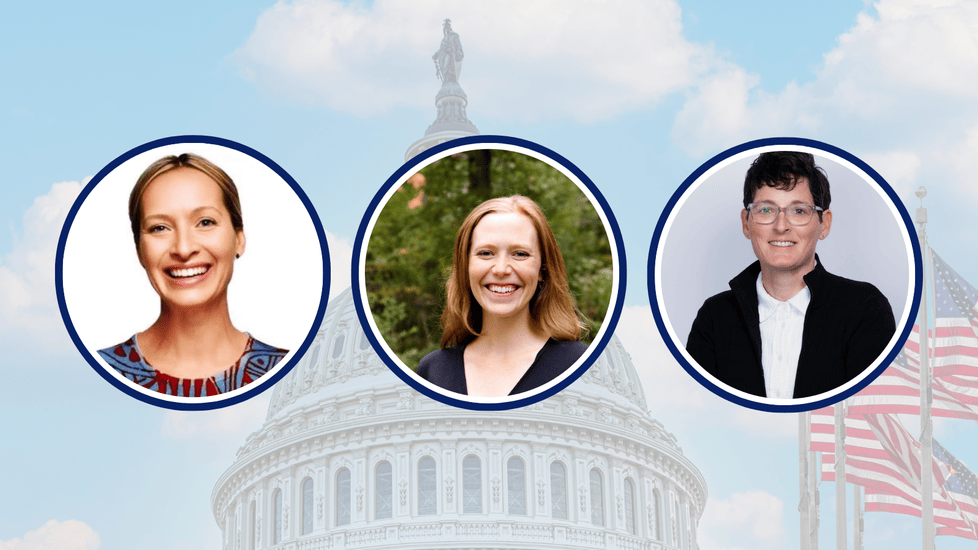
In a recent episode of the Love and Leary Podcast, hosted by nurse leaders Rebecca Love and Marion Leary, public health nurse Jerilyn Hoover shared a firsthand account of what happened when federal global health funding was abruptly halted and what it has meant for patients, health workers, and the nursing profession itself.
Her story is not an abstract policy debate. It is about clinics closing. Medications running out. Nurses losing their jobs overnight. Entire health systems destabilized after decades of partnership and progress.

A Nurse Who Chose Systems Over Cynicism
Jerilyn’s path began at the bedside. Even in nursing school, she noticed a pattern.
She saw patients treated in the hospital, stabilized, and sent “back to the same environments that brought them to the hospital in the first place.”
That realization led her to public health.
With global roots and early nursing work in Haiti, Jerilyn developed a systems-level lens on healthcare. When she returned to the U.S., she worked at a Federally Qualified Health Center as a nurse care manager, where she encountered daily insurance barriers.
She described sitting in her office with a corded phone, calling insurance companies to secure medications for patients. “I just was on the phone with insurance companies all the time trying to get needed medications covered for my patients,” she said. “And I just wanted to like, bang it against the wall and say, this is important, this matters for them. And you're making it harder.”
Instead of remaining frustrated, she pursued advanced training, earning a Master of Public Health at Johns Hopkins focused on health systems, policy, and workforce development. That path led her to the U.S. Agency for International Development, where she eventually served as a Health Workforce Development Advisor and Acting Health Workforce Branch Chief.
The Funding Freeze
During the week of the presidential inauguration, Jerilyn was in Côte d’Ivoire meeting with nursing associations about strengthening nursing education and building continuing professional development programs.
Then came the executive orders and a 90-day freeze on foreign aid.
Programs that supported hundreds of thousands of health workers through initiatives such as PEPFAR were suddenly frozen. Partners were told they could not spend funds, including money already awarded. Clinics closed. Health workers were laid off without notice.
“We put health workers in this morally injurious situation because of how quickly what happened was rolled out,” Jerilyn explained.
In some settings, nurses had enough HIV medication for only a portion of the patients who needed treatment. Supply chains that had taken decades to build were interrupted in a matter of days.
The Human Toll
The consequences were immediate.
Jerilyn referenced published analyses estimating that more than 700,000 people died in the first year following the cuts, with projections of up to 14 million additional avoidable deaths by 2030.
Beyond mortality statistics, the emotional and psychological impact on health workers was profound. Many were sole breadwinners for extended families. They were also forced to turn away patients they had cared for over many years.
Jerilyn said the impact “sits very heavily” with her, reflecting on the speed and scale of the disruption and the harm it caused.
Marion Leary emphasized the broader impact: “These are hugely impactful programs that individuals who've worked there were affected by. But locally and globally patients and communities are affected by.”
Much of Jerilyn’s career had focused on building positive working environments and strengthening health systems. The rapid changes left little room for planning or transition.

The Overlooked Impact on Nursing Leadership
While headlines focused on civil service layoffs and international aid, another consequence received less attention: the loss of nurses in federal leadership roles.
Many nurses working in agencies such as USAID and CDC did not hold job titles that included the word nurse. Yet their clinical experience shaped workforce strategy, policy decisions, and program design.
“We want nurses in jobs where decisions are being made about how health services are designed and how public health programs are implemented,” Jerilyn said.
She often served as what she described as a translator and a bridge between frontline nursing realities and policy discussions. When programs were not producing expected outcomes, she would ask whether anyone had consulted the nurses delivering care.
“Nine times out of ten, they'll be able to give you a laundry list of reasons why what you thought was going to happen is not either feasible in the environment clinically,” she said.
Rebecca Love addressed the long-term implications for the profession: “We basically removed an entire population and profession from the entire federal government leadership in a way that is now going to leave an absence of nursing voices to influence any forms of policy that we have at scale.”
With federal cuts eliminating many of these positions, nursing career pathways beyond the bedside have narrowed. Jerilyn cautions that without deliberate rebuilding, the profession risks retreating into only clinical or academic spaces.
“If we're not in the spaces outside of those clinical or academic avenues, then there's just less of us to be near the door to be able to jump into a conversation when it's meaningful,” she said.
A Profession at a Crossroads
The disruption extends beyond global programs. Cuts to federal agencies also affect CDC initiatives, NIH-funded research, and nurse-led research efforts. These changes impact communities worldwide and here at home.
Many displaced nurses have returned to clinical roles, often paying for relicensure and continuing education themselves. Others are working to translate public health and policy expertise into new opportunities.
Jerilyn described 2025 as “kind of the year of undoing.” At the same time, she expressed cautious hope.
“I believe strongly that there will be new things that arise out of the ashes of what has happened this last year,” she said. “But we can't quite see those things yet.”
Moving Forward
Jerilyn and her co-authors outlined practical actions in a recent article in American Nurse. These include engaging in policy advocacy, strengthening mentorship networks, supporting nurses in translating systems-level skills, and encouraging professional associations to provide targeted support for displaced nurses.
Her experience is a reminder that nursing leadership does not begin and end at the bedside. It also exists in policy rooms, funding decisions, and global partnerships.
When nurses are absent from those spaces, the consequences reach far beyond any single program.
To listen to their full conversation, check out the Love n’ Leary Podcast on Apple Podcasts, Spotify, or right here on nurse.org/lovenleary!
🤔Nurses, share your thoughts in the discussion forum below!