



School Nurses Are Being Trained to Detect Endometriosis in Teens — And It’s Helping

- Endometriosis in students is a public health concern: The ENPOWR (Endometriosis: Promoting Outreach and Wide Recognition) program by the Endometriosis Foundation of America represents a groundbreaking initiative addressing a critical gap in adolescent healthcare.
- Training school nurses: The program's free training program equips school nurses across the United States to better recognize endometrosis symptoms.
- Empowering students: On average, 12% of girls miss 1-2 days of school monthly due to severe menstrual pain.
After decades of silent suffering and dismissal in doctors' offices, endometriosis is finally starting to become recognized as the serious public health concern it is.
And leading the helm at both recognizing and treating endometriosis in one of the first places that it shows up? None other than school nurses.

The Connection Between School Nurses and Endometriosis
Endometriosis is a significant health concern for menstruating students, and because school is where most young people spend the majority of their time, that's where symptoms will first appear.
"School nurses are often among the first adults outside the home to witness severe menstrual pain up close," explains Carolyn Mayer, Program Director for the Endometriosis Foundation of America’s (EndoFound) ENPOWR program.
Research shows that at least 12% of adolescent girls miss 1-2 days of school monthly due to menstrual pain, making it the leading cause of school absences among this population. These absences quickly compound into missed lectures, incomplete assignments, and social isolation.
These scenarios represent more than isolated incidents—they're a pattern reflecting endometrosis as a significant public health concern that affects up to 18% of students who menstruate.
It's also not just about the missed school (although falling behind academically can have long-term impacts as well). The impact of unrecognized and untreated endometriosis can wreak havoc on a young child or teen who may feel they are alone, dismissed by doctors, and learn to mistrust the medical system. Anxiety, depression, and other mental health impacts are common in endometrosis sufferers.
Kids or teens may fail to realize their condition may be treatable and suffer needlessly for years, decades, or a lifetime. On average, an endometriosis diagnosis is delayed by at least 10 years after someone first seeks help for their symptoms.
More Than 'Just' Period Pain: Recognizing Endometriosis at School
Because school nurses can play such a pivotal role in helping to recognize the initial symptoms of endometriosis in students, the Endometriosis Foundation of America’s (EndoFound) ENPOWR program was founded in 2013.
The program provides training to help school nurses recognize endometriosis symptoms in students.
Rather than treating menstrual-related symptoms in isolation, school nurses learn to recognize patterns that might indicate endometriosis, including:
- Recurring nurse visits with similar complaints
- Cyclic patterns of absences
- Pain that disrupts daily activities
- Symptoms extending beyond typical menstrual discomfort
The program emphasizes that endometriosis symptoms often extend beyond pelvic pain. Students may present with additional symptoms that can be connected to their menstrual cycles but rarely recognized as such, such as:
- Gastrointestinal issues
- Urinary complaints
- Chronic fatigue
- Leg and back pain
- Nausea
- Headaches

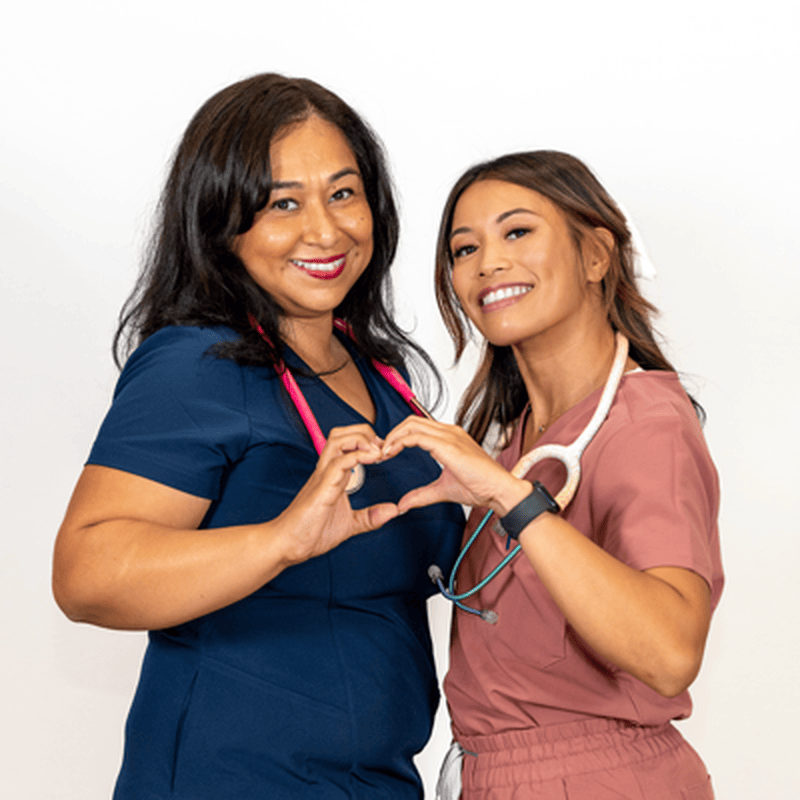
Image Source: The ENPOWR Project
Lisell Zuniga, Health Services Administrator in Illinois and President-Elect of the Illinois Association of School Nurses, has successfully implemented ENPOWR in her district and saw a nearly immediate significant shift in how nurses approached "red flag" menstrual symptoms.
"One of the most significant shifts was reframing menstrual pain from something that is simply managed at school to something that warrants closer attention when it is persistent, severe, or disruptive to learning," she notes.
The training provides practical documentation tools that help nurses track symptom timing, severity, and functional impact. This documentation creates comprehensive records that support conversations with parents and healthcare providers, potentially accelerating diagnosis and treatment.
Consider how this training could change nurse responses:
- Pre-training, a student reporting severe menstrual pain might receive basic pain medication and rest before returning to class.
- Post-training, that same nurse can treat the immediate symptom, but will also ask follow-up questions about symptom duration and interference with daily activities, document patterns, and initiate conversations with caregivers as appropriate about seeking medical evaluation for further diagnosis.
A trained and educated approach validates student experiences at a critical developmental stage. When severe menstrual pain is dismissed as normal, it teaches young people that their pain assessments are unreliable.
Conversely, early validation signals that they are credible witnesses to their own bodies and that persistent symptoms deserve persistent attention. Training also helps rewrite the narrative for everyone that severe period pain is "normal."
“Too often, these concerns are normalized or minimized, both in schools and in healthcare settings, which can delay appropriate care,” Zuniga noted.
What Nurses Can Do
If you're a school nurse, you can reach out to ENPOWR to bring the program to your district.
Non-nurses can also help bring the program to their local students and community, as the ENPOWR's programs are available at no cost. Outside of the nurse training, the program's educational resources can help students recognize symptoms in themselves and promote better health literacy overall.
"Everything we do is free to schools and parents," Mayer notes. "Our goal is to get education and awareness out there as widely as possible to fill gaps in health education, specifically endometriosis education."
The program is designed to work best with trained school nurses and student literacy, because, as Mayers points out, if a student is educated to reach out to a health professional they are closest to, and they go to a school nurse who is not trained on how to recognize endometriosis, there may be a larger problem at play.
Get Involved
Schools can request training directly through ENPOWR's website or by contacting enpowr@endofound.org. The program also provides classroom-ready educational resources for students and families.
The program is expanding rapidly. Recent trainings in New York reached hundreds of school nurses through partnerships with the New York State Education Department and the New York State Center for School Health. Dr. Serin Seckin, an endometriosis specialist, joined these sessions to emphasize that severe menstrual pain is not "normal" and that students deserve validation and timely intervention.
"We know the need is there," Mayer says. "We're hearing from nurses who are seeing patterns in their health offices and want better tools to respond."
Nurses can also sign up to get involved in the nation's first-ever House Caucus for Endometriosis online.
By positioning school nurses as key players in early endometriosis recognition, ENPOWR bridges the gap between educational and healthcare systems.
For the millions of students suffering from endometriosis symptoms, this intervention could mean the difference between years of dismissed pain and prompt, appropriate care, potentially altering their educational outcomes and relationship with their bodies for decades to come.
🤔Nurses, what do you think about this program? Share your thoughts below.
If you have a nursing news story that deserves to be heard, we want to amplify it to our massive community of millions of nurses! Get your story in front of Nurse.org Editors now - click here to fill out our quick submission form today!