



This CA Fire Department Is Sending Nurse Practitioners to 911 Calls (And It’s Working)
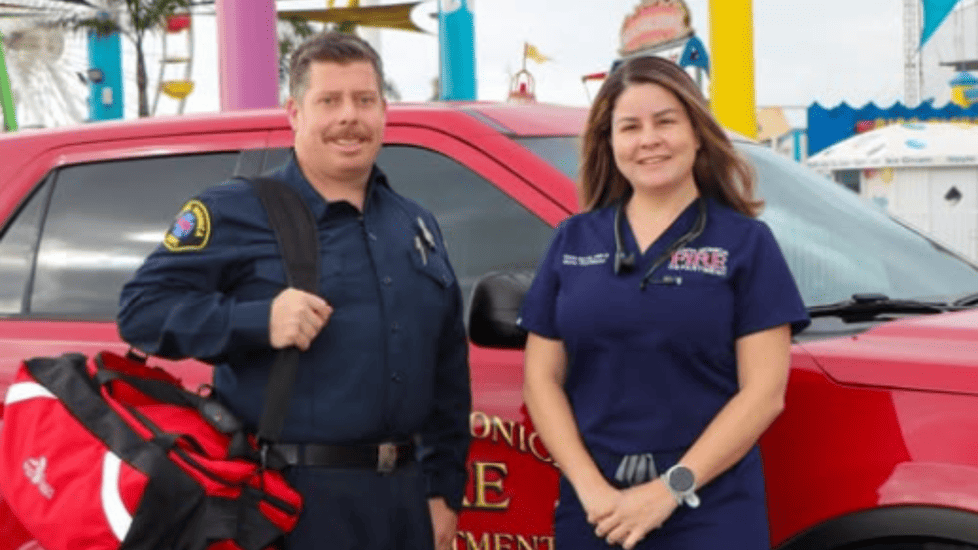
- Santa Monica’s Advanced Provider Unit pairs nurse practitioners with firefighter/paramedics to manage non-life-threatening 911 calls in the field
- The program reduces ambulance and ER strain while delivering timely, patient-centered care
- Nurse practitioners play a critical role in addressing both medical and social needs at the scene
Image: City of Santa Monica
In November 2025, the Santa Monica Fire Department (SMFD) introduced its Advanced Provider Unit (APU), a groundbreaking program pairing nurse practitioners (NPs) with firefighter/paramedics to address non-life-threatening 911 calls. This innovative approach is transforming emergency medical services by delivering advanced care directly to patients in the field. The goal? To enhance patient outcomes while preserving emergency resources for critical cases.

Fire Chief Matt Hallock explains, “This program reflects our commitment to innovation, compassion and public safety excellence. It brings high-level clinical expertise directly to those who need it most, while keeping lifesaving resources available for critical emergencies.”
Currently operating Monday through Thursday, the program plans to expand to seven days a week. By addressing less urgent needs on-site, the APU supports more efficient ambulance and emergency department utilization, ensuring capacity remains available for true emergencies.
For nurses, this program offers an exciting opportunity to practice at the top of their license. But how does it work, and why should it matter to you?
Taking Emergency Care Beyond the ER
Imagine this scenario: A 911 call comes in about a woman on Santa Monica Beach with non-urgent medical concerns. Under traditional response models, she would likely be transported to an already crowded emergency department. With the APU in place, the response looks very different.
An APU team—consisting of a nurse practitioner and a firefighter/paramedic—arrives on scene. The NP performs a comprehensive assessment, addresses the patient’s immediate needs, and determines that hospital transport is not necessary. Instead, the patient receives appropriate care on-site and is connected with relevant local services for follow-up support.
This hypothetical example illustrates the core function of the APU: addressing medical and social needs in real time. Patients receive individualized, compassionate care where they are, while emergency services remain available for life-threatening situations.
For nurses, this model offers a chance to make a direct impact in ways that extend beyond traditional clinical settings. Your skills become a vital link between patients and meaningful, long-term resources.
Why This Matters for Nurses
The APU is part of Santa Monica’s two-year Realignment Plan, aimed at improving public safety and emergency services. For nurses, it opens up an expanded scope of practice in the prehospital environment.
Traditionally, many emergency calls result in transport to the ER, even when a patient’s condition does not require it. With the APU, nurse practitioners can assess, treat, and coordinate follow-up care on-site. This approach eases ambulance backlogs, reduces ER overcrowding, and delivers care that is more closely aligned with patient needs.
The program also addresses social determinants of health. By meeting patients where they are—both physically and situationally—nurses can intervene at the source of ongoing health challenges. Connecting individuals with housing assistance, behavioral health support, or substance use treatment can often be more impactful than a single emergency department visit.
If you’ve ever felt your clinical expertise could be used more fully, this program offers a new path forward. SMFD is actively recruiting part-time nurse practitioners with emergency or urgent care experience. Working alongside paramedics, you’ll apply your skills across a wide range of situations, from minor medical complaints to behavioral health crises.
Job Requirements for the Advanced Provider Unit
To support safe, high-quality care in the field, SMFD has established clear qualifications for nurse practitioners interested in joining the Advanced Provider Unit.
Minimum experience and licensure requirements include:
- At least one year of full-time, paid experience practicing as a nurse practitioner in an emergency department, urgent care, or a comparable clinical environment
- Current licensure as both a Registered Nurse and Nurse Practitioner through the California Board of Registered Nursing
- An active furnishing number and a valid Drug Enforcement Administration (DEA) registration
Candidates must also hold national certification in one of the following (or a closely related specialty):
- Family Nurse Practitioner (FNP)
- Emergency Nurse Practitioner (ENP)
- Psychiatric-Mental Health Nurse Practitioner (PMHNP)
Required clinical certifications include:
- Basic Life Support (BLS) from the American Heart Association
- Advanced Cardiac Life Support (ACLS) from the American Heart Association
- Pediatric Advanced Life Support (PALS) from the American Heart Association
Because the role involves responding directly to calls throughout the community, applicants must also possess a valid California driver’s license.
Changing the Face of Emergency Medicine
The APU reflects a growing trend in healthcare: delivering the right care, in the right place, at the right time. Across the country, systems are struggling with ambulance shortages and overcrowded emergency departments. Santa Monica’s model offers a practical solution by leveraging the advanced clinical training of nurse practitioners in the field.
This approach is especially effective for patients who frequently call 911 but do not require emergency transport. Whether managing minor injuries, addressing behavioral health needs, or connecting people with long-term resources, the APU demonstrates that not every 911 call has to end in an ER visit.
The program’s success could influence other cities to adopt similar models, expanding opportunities for nurses to move into community-based roles and broaden their impact.
Collaboration Is the Key
One of the most compelling aspects of the APU is the partnership between nurse practitioners and firefighter/paramedics. Paramedics contribute critical emergency response expertise, while NPs bring advanced clinical decision-making and a broader lens on patient care. Together, they form a highly adaptable team capable of managing complex situations on the spot.
This collaborative model highlights how integrating diverse skill sets can improve outcomes for both patients and the healthcare system.
The Takeaway for Nurses
Santa Monica’s Advanced Provider Unit is more than an innovative pilot—it offers a preview of where emergency care is headed. For nurses, it represents an opportunity to step outside traditional healthcare environments and make a meaningful difference at the community level.
If you’re an NP with a background in emergency or urgent care and a desire to practice in a dynamic, field-based role, this program may be an ideal fit. From managing minor medical issues on city streets to helping patients access life-changing resources, the APU shows how nurses can help reshape emergency services.
Santa Monica’s APU is demonstrating that when nurse practitioners and paramedics work side by side, the result is smarter care, stronger communities, and a forward-looking model for the future of emergency medicine.
🤔Nurses, would you be interested in practicing in a field-based role like this? Share your thoughts in the discussion forum below!
If you have a nursing news story that deserves to be heard, we want to amplify it to our massive community of millions of nurses! Get your story in front of Nurse.org Editors now - click here to fill out our quick submission form today!