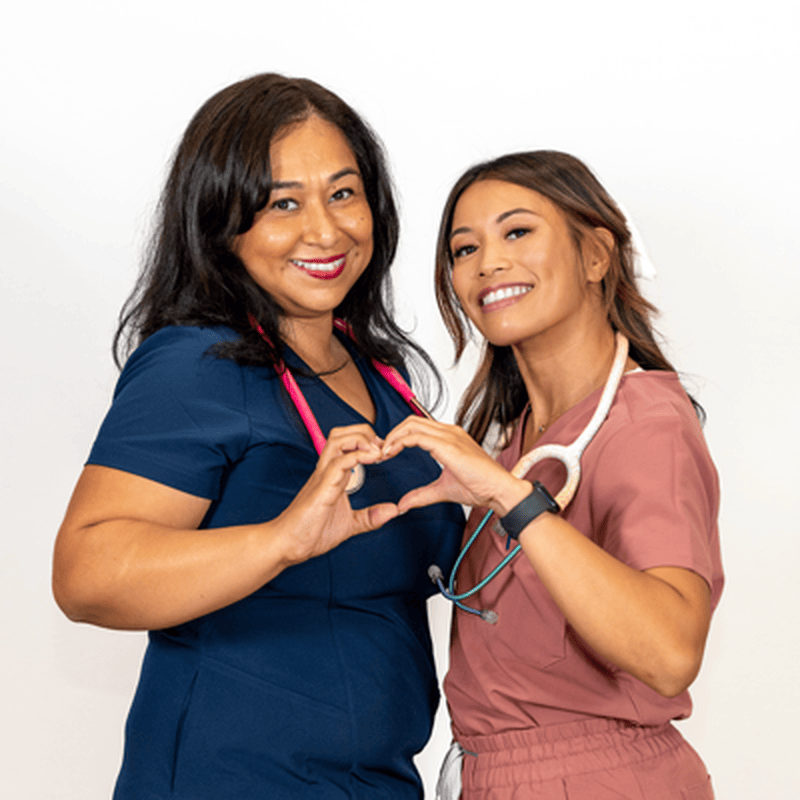




The RN to NP Transition: Shifting Your Professional Mindset


Key Takeaways
- The RN to NP transition means going from clinical expert to novice provider.
- Up to 88% of advanced practice nursing students report moderate to intense impostor feelings during role transitions like this one.
- The biggest mindset change: you’re no longer following care plans. You’re creating them.
- Most new NPs report feeling settled in the role after 12–18 months of full-time practice.
You’ve spent years at the bedside. Managing complex patients, running codes, and training new hires. You know your unit better than anyone. Then you finish your NP program, walk into your first provider role, and suddenly feel like you don’t know anything.
That experience has a name. Researchers call it the “expert to novice” transition, and it’s one of the most disorienting professional shifts in nursing.
This article isn’t about how to become an NP. You’re past that. It’s about the harder part: the identity shift that happens when you move from bedside nursing into advanced practice and start thinking like a provider.
Popular Online Nurse Practitioner (NP) Programs

The Berkley School of Nursing at Georgetown University is one of the world’s leading academic and research institutions, and the university has been delivering graduate nursing programs in a distance-learning environment since 2011. The university's online programs allow students to learn from wherever they are while they pursue an accredited, mission-driven nursing education that will allow them to deliver high-quality care.
 CCNE
CCNE
 RN Required
Enrollment: Nationwide, excluding NY and WA.

Chamberlain University is the #1 largest school of nursing with a community of more than 177,000 students, faculty, and alumni. The school offers MSN-NP programs online and has a long history of successfully delivering top quality education. Chamberlain's Commitment to Completion Grant helps RNs earn advanced degrees with savings up to $9,100.
CCNE
 Online
RN Required
Online
RN Required
Enrollment: Nationwide except CT, NY, RI

Whether you’re taking the first steps toward a nursing degree, seeking to advance as a nurse or want to hone your craft with specialized study, there’s a path for you at Purdue Global’s School of Nursing. Our programs were designed so that you can easily balance your lives at home and work with school - without sacrificing the rigor and cutting-edge curriculum of a quality nursing education.
CCNE
Online
RN Required
Enrollment: Nationwide, but certain programs have state restrictions. Check with Purdue for details.
-
MSN - Family NP
-
MS-DNP - Family NP
-
Postgrad Cert - Family NP
-
MSN - Psychiatric Mental Health NP
-
MS-DNP - Psychiatric Mental Health NP
-
Postgrad Cert - Psychiatric Mental Health NP
-
MSN - Adult-Gerontology Primary Care NP
-
MSN - Adult-Gerontology Acute Care NP
-
MS-DNP - Adult-Gerontology Acute Care NP
-
MS-DNP - Adult NP

GCU's College of Nursing and Health Care Professions has a nearly 35-year tradition of preparing students to fill evolving healthcare roles as highly qualified professionals.
CCNE
Online
RN Required
Enrollment: Nationwide

Earn your nursing degree from one of the largest nursing education providers in the U.S. Walden University’s BSN, MSN, post-master’s APRN certificate, and DNP programs are accredited by the Commission on Collegiate Nursing Education (CCNE). Get enhanced practicum support with our Practicum Pledge.
CCNE
Online
RN Required
Enrollment: Nationwide, excluding CT, ND, NY and RI. Certain programs have additional state restrictions. Check with Walden for details.
Why Does the RN to NP Transition Feel So Hard?
A 2024 systematic review by Pleshkan in the Journal of Professional Nursing confirmed what most new NPs already know: the shift from expert RN to novice NP leads to decreased confidence, role ambiguity, and impaired professional development in the first year.
The gap hits experienced nurses hardest. After years, sometimes a decade, of knowing exactly what to do, every patient encounter as a new NP feels slower and less certain. The NP role demands fundamentally different skills:
- Diagnostic reasoning instead of assessment and monitoring
- Treatment planning instead of treatment execution
- Greater clinical autonomy (scope varies by state practice laws)
- Legal accountability for diagnosis, prescribing, and outcomes
Bottom line: Feeling like a beginner again doesn’t mean you made a mistake. It means you’re doing something fundamentally different, and your brain needs time to catch up.
What Changes When You Go From RN to NP?
The RN to NP transition isn’t a promotion. It’s a role change. Understanding exactly what shifts—and what carries over from your bedside experience—helps you set realistic expectations.
Key RN to NP Role Differences
| As an RN | As an NP |
| Follow established care plans | Create and modify care plans |
| Assess patients and report to providers | Diagnose conditions and initiate treatment |
| Manage tasks within a shift | Manage patient panels and outcomes over time |
| Measured by task completion | Measured by patient encounters and clinical outcomes |
| Collaborate within a care team | Lead clinical discussions and consult specialists |
| Follow medication protocols | Prescribe medications and manage drug interactions |
What Your RN Experience Gives You as an NP
Your bedside years aren’t wasted. These skills transfer directly to the NP role:
- Patient assessment instincts. You already know what “something’s off” looks like.
- Communication skills built across patients, families, and interdisciplinary teams.
- Systems knowledge: workflows, bottlenecks, workarounds.
- Crisis composure from handling emergencies under pressure.
Bottom line: The goal isn’t to forget your RN experience. It’s to build on it, while accepting that the provider role requires new skills on top of what you already know.
Popular Online Nurse Practitioner (NP) Programs
The Berkley School of Nursing at Georgetown University is one of the world’s leading academic and research institutions, and the university has been delivering graduate nursing programs in a distance-learning environment since 2011. The university's online programs allow students to learn from wherever they are while they pursue an accredited, mission-driven nursing education that will allow them to deliver high-quality care.
CCNE
RN Required
Enrollment: Nationwide, excluding NY and WA.
Chamberlain University is the #1 largest school of nursing with a community of more than 177,000 students, faculty, and alumni. The school offers MSN-NP programs online and has a long history of successfully delivering top quality education. Chamberlain's Commitment to Completion Grant helps RNs earn advanced degrees with savings up to $9,100.
CCNE
Online
RN Required
Enrollment: Nationwide except CT, NY, RI
Whether you’re taking the first steps toward a nursing degree, seeking to advance as a nurse or want to hone your craft with specialized study, there’s a path for you at Purdue Global’s School of Nursing. Our programs were designed so that you can easily balance your lives at home and work with school - without sacrificing the rigor and cutting-edge curriculum of a quality nursing education.
CCNE
Online
RN Required
Enrollment: Nationwide, but certain programs have state restrictions. Check with Purdue for details.
-
MSN - Family NP
-
MS-DNP - Family NP
-
Postgrad Cert - Family NP
-
MSN - Psychiatric Mental Health NP
-
MS-DNP - Psychiatric Mental Health NP
-
Postgrad Cert - Psychiatric Mental Health NP
-
MSN - Adult-Gerontology Primary Care NP
-
MSN - Adult-Gerontology Acute Care NP
-
MS-DNP - Adult-Gerontology Acute Care NP
-
MS-DNP - Adult NP
GCU's College of Nursing and Health Care Professions has a nearly 35-year tradition of preparing students to fill evolving healthcare roles as highly qualified professionals.
CCNE
Online
RN Required
Enrollment: Nationwide
Earn your nursing degree from one of the largest nursing education providers in the U.S. Walden University’s BSN, MSN, post-master’s APRN certificate, and DNP programs are accredited by the Commission on Collegiate Nursing Education (CCNE). Get enhanced practicum support with our Practicum Pledge.
CCNE
Online
RN Required
Enrollment: Nationwide, excluding CT, ND, NY and RI. Certain programs have additional state restrictions. Check with Walden for details.
How Common Is Impostor Syndrome for New Nurse Practitioners?
Extremely common—and well-documented. Research puts impostor feelings at 36% to 88% of nursing populations (Edwards-Maddox 2023; Ying 2023), with the highest rates among nurses moving into advanced practice roles.
Nurse.org's Expert's Advice
"Becoming a Nurse Practitioner requires hard work and dedication, but it can also be unnerving. Stepping into the unfamiliar is never easy. Remember the basics, rely on your experience, ask questions, and give yourself the time to settle into the new role."

Why it hits new NPs especially hard:
- You’re comparing NP performance to RN expertise. After years of confidence, everything feels slower.
- The stakes change. Prescribing a medication you’ve only ever administered is a different kind of accountability.
- Limited structured support. Many NP programs lack strong preceptorship models, leaving new grads to figure it out on the job.
What NP Impostor Syndrome Looks Like in Practice
Jordan spent 8 years as an ICU charge nurse, the one everyone came to with questions. Six months into her first NP role in primary care, she second-guesses every diagnosis. She runs labs she knows are probably unnecessary, just to feel sure. She stays an hour late finishing notes because she’s triple-checking everything.
Jordan isn’t bad at her job. She’s going through what nearly every new NP faces. The difference between those who push through and those who burn out is recognizing impostor syndrome early and building strategies to manage it.
Bottom line: Impostor syndrome isn’t a sign that you’re not ready. It’s a predictable response to a major professional identity shift.
How to Shift Your RN Mindset During the NP Transition
1. Redefine What “Expert” Means for Your NP Career
You were an expert RN. You’re a novice NP. Both are true. Instead of thinking you’re starting over, reframe it. You’re adding a new layer of expertise on top of a strong clinical foundation. Your bedside experience gives you pattern recognition and patient instincts that many providers take years to develop.
2. Stop Comparing Your NP Performance to Your RN Confidence
This trap catches the most experienced nurses hardest. You remember how efficient you were as an RN, and every clunky NP moment feels like a step backward. It’s not. Compare yourself to where you were last month—not where you were as a seasoned RN.
3. Get Comfortable Making Wrong Calls
As an RN, being wrong meant catching an error before the provider adjusted the plan. As an NP, being wrong means you made the wrong plan. The accountability shifts. New NPs who grow fastest treat mistakes as data. Ask for feedback, review the case, and move on.
4. Shift From “What Do I Do?” to “What Do I Think?”
RN training emphasizes protocols and procedures. NP practice requires clinical reasoning: weighing probabilities, considering differentials, and making calls with incomplete information. When you’re writing a SOAP note, don’t just document what you see. Ask: What could this be? What else could it be? What’s the most dangerous thing it could be?
5. Own the NP Title Out Loud
Many new NPs hesitate to introduce themselves as “your nurse practitioner.” It feels presumptuous after years as an RN. Do it anyway. Introduce yourself as the NP, make recommendations with confidence, and let patients take their cues from how you present yourself.
Bottom line: The NP mindset shift doesn’t happen overnight. These five adjustments give you a framework to work with the transition, not against it.
How Clinical Decision-Making Changes From RN to NP
The single biggest functional change in the RN to NP transition is clinical decision-making. As an RN, you executed care plans. As an NP, you create them.
Clinical decision-making as an NP follows three phases:
- Diagnosis: Focused history, targeted exam, differential diagnosis list
- Severity assessment: Ruling out red flags, deciding what needs immediate action vs. monitoring
- Management: Treatment plan, appropriate tests, prescriptions, follow-up schedule
Practical Tips for Building NP Clinical Reasoning
- Use a systematic approach. Same core questions, same order, every patient.
- Think in differentials. For every chief complaint, list at least 3: most common, most likely for this patient, most dangerous.
- Cluster your findings. Group signs, symptoms, and exam findings. Patterns emerge faster than isolated data.
- Keep a case log. Cases that challenged you, reviewed weekly. This accelerates pattern recognition faster than anything.
A Real-World Example: ER Nurse to Family NP
Marcus, a former ER nurse with 12 years of experience, starts as a family NP. A patient comes in with a two-week cough. As an ER nurse, Marcus would have documented vitals, administered meds, and monitored the patient. As an NP, Marcus decides: URI that will resolve? Bronchitis? Pneumonia? Does this patient need imaging, antibiotics, a referral, or follow-up in a week?
Marcus leans on his ER instincts. He’s excellent at identifying sick patients and layers them with his new diagnostic framework. Within a few months, the process starts to feel like clinical judgment instead of guessing.
Bottom line: Clinical decision-making is a skill, not a talent. Build it the same way you built your RN skills—repetition, feedback, and deliberate practice.
How to Find Mentors and Support During Your NP Transition
The NPs who adjust fastest share one trait: they don’t try to do it alone.
Find an NP Mentor in Your Specialty
A mentor—ideally an experienced NP in your specialty—can cut months off your learning curve. If your workplace doesn’t have a formal mentorship program, ask anyway. Many experienced NPs will mentor informally if you approach them directly.
For more advice, see our guide on tips for new nurse practitioners who are struggling.
Connect With Other New NPs
Peer support is just as important as mentorship. Join professional organizations like the AANP, attend local NP meetups, or participate in online communities. Hearing “I felt the same way” from someone six months ahead of you helps more than you’d expect.
Negotiate Your NP Onboarding Before You Accept a Position
Before accepting an NP position, ask:
- How long is the ramp-up before a full patient load?
- Will you have a collaborating provider available for questions?
- Is there a structured orientation or is it learn-as-you-go?
- What does the first 90 days look like?
If a practice expects you to see a full panel on day one with no support, that’s a red flag. Workplaces that invest in onboarding new NPs have better retention and higher provider satisfaction.
Bottom line: A strong support network isn’t a crutch. It’s how experienced NPs got where they are.
What Does the First Year as a Nurse Practitioner Look Like?
Researchers have mapped the NP role transition into predictable stages. Knowing the timeline makes the hard parts easier to tolerate.
| Timeframe | What You’ll Likely Feel | What Helps |
| Months 1–3 | Overwhelmed. Slow. Constantly second-guessing. You may question your career choice. | Lean on mentors. Focus on accuracy, not speed. Fewer patients is normal. |
| Months 4–6 | More confident on common presentations. Still uncomfortable with complex cases. | Keep a case log. Ask for feedback on your decision-making process, not just outcomes. |
| Months 7–9 | Efficiency improves. Less time on routine cases, more energy for complex ones. | Manage cases independently before consulting. Push your comfort zone outward. |
| Months 10–12 | You start to feel like an NP, not just an RN with a new title. | Reflect on how far you’ve come. Mentor a newer NP. Set year-two development goals. |
Researchers describe this arc as moving from “limbo to legitimacy”—a pattern confirmed in Pleshkan’s 2024 systematic review of NP role transitions. Most new NPs report feeling settled by the end of the first year.
Bottom line: The first year is hard for nearly everyone. If you’re in months 1–6, give yourself grace. Past month 9, you’re probably doing better than you think.
Popular Online Nurse Practitioner (NP) Programs
The Berkley School of Nursing at Georgetown University is one of the world’s leading academic and research institutions, and the university has been delivering graduate nursing programs in a distance-learning environment since 2011. The university's online programs allow students to learn from wherever they are while they pursue an accredited, mission-driven nursing education that will allow them to deliver high-quality care.
CCNE
RN Required
Enrollment: Nationwide, excluding NY and WA.
Chamberlain University is the #1 largest school of nursing with a community of more than 177,000 students, faculty, and alumni. The school offers MSN-NP programs online and has a long history of successfully delivering top quality education. Chamberlain's Commitment to Completion Grant helps RNs earn advanced degrees with savings up to $9,100.
CCNE
Online
RN Required
Enrollment: Nationwide except CT, NY, RI
Whether you’re taking the first steps toward a nursing degree, seeking to advance as a nurse or want to hone your craft with specialized study, there’s a path for you at Purdue Global’s School of Nursing. Our programs were designed so that you can easily balance your lives at home and work with school - without sacrificing the rigor and cutting-edge curriculum of a quality nursing education.
CCNE
Online
RN Required
Enrollment: Nationwide, but certain programs have state restrictions. Check with Purdue for details.
-
MSN - Family NP
-
MS-DNP - Family NP
-
Postgrad Cert - Family NP
-
MSN - Psychiatric Mental Health NP
-
MS-DNP - Psychiatric Mental Health NP
-
Postgrad Cert - Psychiatric Mental Health NP
-
MSN - Adult-Gerontology Primary Care NP
-
MSN - Adult-Gerontology Acute Care NP
-
MS-DNP - Adult-Gerontology Acute Care NP
-
MS-DNP - Adult NP
GCU's College of Nursing and Health Care Professions has a nearly 35-year tradition of preparing students to fill evolving healthcare roles as highly qualified professionals.
CCNE
Online
RN Required
Enrollment: Nationwide
Earn your nursing degree from one of the largest nursing education providers in the U.S. Walden University’s BSN, MSN, post-master’s APRN certificate, and DNP programs are accredited by the Commission on Collegiate Nursing Education (CCNE). Get enhanced practicum support with our Practicum Pledge.
CCNE
Online
RN Required
Enrollment: Nationwide, excluding CT, ND, NY and RI. Certain programs have additional state restrictions. Check with Walden for details.
Frequently Asked Questions
This article is for informational purposes only and does not constitute medical or career advice. Individual experiences with the RN to NP transition vary. Consult with mentors, program advisors, and professional organizations for guidance specific to your situation.
NP