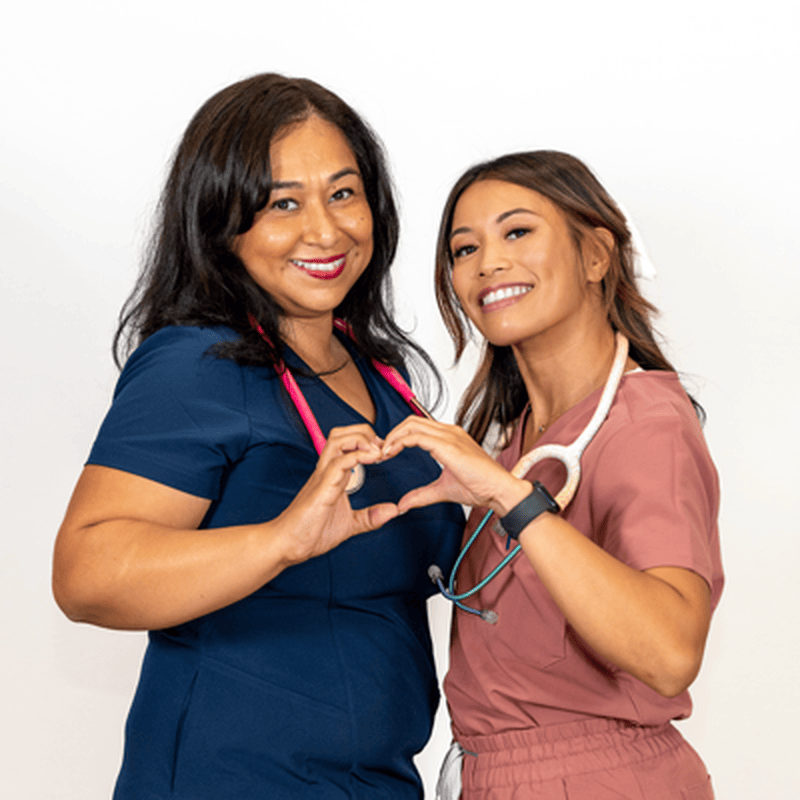




FNP vs PMHNP: Which NP Specialty Is Best for You?
![FNP vs PMHNP: Which NP Specialty Is Best? | [year]](https://media.nurse.org/cache/98/05/98051b117db47d7b0b88acd2ea71adaf@2x.webp)
FNPs and PMHNPs are both nurse practitioners, but FNPs provide broad primary care for patients of all ages, while PMHNPs specialize in diagnosing and treating mental health conditions. The main difference is patient focus—general healthcare vs mental health. And while both share similar training paths and strong job demand, PMHNPs typically earn slightly higher salaries.
Choosing between a family nurse practitioner (FNP) and a psychiatric mental health nurse practitioner (PMHNP) comes down to one key question: do you want to focus on overall physical health or specialize in mental health care?
Both roles are in high demand, offer strong salaries, and allow you to provide advanced, patient-centered care. This guide breaks down the key differences so you can decide which path fits your interests, strengths, and long-term career goals.
Popular Online Psychiatric-Mental Health Nurse Practitioner (PMHNP) Programs

Learn in-depth practices in how to provide comprehensive psychiatric mental health care at Purdue Global’s School of Nursing. Grow your skills in the assessment, diagnosis, treatment, and management of a variety of psychiatric mental health disorders across the lifespan of patients.
 CCNE
CCNE
 Online
 RN Required
Enrollment: Nationwide, but certain programs have state restrictions. Check with Purdue for details.

Chamberlain University is the #1 largest school of nursing with a community of more than 177,000 students, faculty, and alumni. The school offers MSN-NP programs online and has a long history of successfully delivering top quality education. Chamberlain's Commitment to Completion Grant helps RNs earn advanced degrees with savings up to $9,100.
CCNE
Online
RN Required
Enrollment: Nationwide except CT, NY, RI

Earn your nursing degree from one of the largest nursing education providers in the U.S. Walden University’s BSN, MSN, post-master’s APRN certificate, and DNP programs are accredited by the Commission on Collegiate Nursing Education (CCNE). Get enhanced practicum support with our Practicum Pledge.
CCNE
Online
RN Required
Enrollment: Nationwide, excluding CT, ND, NY and RI. Certain programs have additional state restrictions. Check with Walden for details.

GCU's College of Nursing and Health Care Professions has a nearly 35-year tradition of preparing students to fill evolving healthcare roles as highly qualified professionals.
CCNE
Online
RN Required
Enrollment: Nationwide
 ACEN
Online
RN Required
ACEN
Online
RN Required
Enrollment: Nationwide
FNP vs PMHNP: Key Differences
| Category | FNP | PMHNP |
|---|---|---|
| Focus | Primary care | Mental health care |
| Patient Population | All ages | All ages |
| Conditions Treated | Acute and chronic physical conditions | Psychiatric and substance use disorders |
| Treatments | Physical exams, diagnostics, medications | Therapy, psychiatric evaluation, medications |
| Work Settings | Clinics, urgent care, private practice | Hospitals, outpatient psychiatry, telehealth |
What is a Family Nurse Practitioner (FNP)?
Family nurse practitioners are primary healthcare providers who treat people of all ages. They provide care to individuals and entire families, diagnosing conditions, ordering and interpreting labs, coordinating with other healthcare providers, and prescribing medications.
What FNPs Do
- Perform physical exams and health assessments
- Diagnose and treat illnesses like infections, diabetes, and hypertension
- Order and interpret diagnostic tests
- Prescribe medications
- Provide preventive care, including screenings and vaccinations
Where FNPs Work
- Primary care clinics
- Private practices
- Urgent care centers
- Community health clinics
FNPs often serve as a patient’s main healthcare provider and manage a wide range of medical needs.
What is a Psychiatric Mental Health Nurse Practitioner (PMHNP)?
Psychiatric mental health nurse practitioners specialize in mental health treatment and primarily help patients with mental illnesses, disorders, and substance abuse problems. A PMHNP's primary duties include assessing, diagnosing, and providing treatment plans to patients.
What PMHNPs Do
- Conduct psychiatric evaluations
- Diagnose conditions like anxiety, depression, bipolar disorder, and schizophrenia
- Prescribe and manage psychotropic medications
- Provide psychotherapy
- Develop long-term mental health treatment plans
Where PMHNPs Work
- Psychiatric hospitals
- Outpatient mental health clinics
- Private practice
- Telehealth platforms
PMHNPs focus exclusively on mental health, often working with patients who require ongoing and specialized care.
Scope of Practice
FNPs and PMHNPs are both advanced practice registered nurses (APRNs), but their scope of practice differs based on their specialty.
FNPs provide comprehensive primary care. They diagnose and treat a wide range of physical health conditions and focus on preventive care.
PMHNPs specialize in mental health. They diagnose psychiatric disorders, prescribe medications, and provide therapy.
Both roles may practice independently or under physician collaboration, depending on state laws. In some settings, there is overlap, especially in primary care where FNPs may address basic mental health concerns. However, complex psychiatric conditions are typically managed by PMHNPs.
Salary
Both specialties offer strong earning potential, but PMHNPs often earn more due to high demand and a shortage of mental health providers.
Average Salaries
- FNP: $127,976 annually (ZipRecruiter)
- PMHNP: $139,486 annually (ZipRecruiter)
Factors That Impact Salary
- Geographic location
- Years of experience
- Practice setting
- Level of autonomy
Mental health services continue to expand, especially in telehealth, which has contributed to higher compensation for PMHNPs in many areas.
Work Environment and Schedule
Your day-to-day experience can look very different depending on the specialty you choose.
FNP Work Environment
- Fast-paced primary care settings
- High patient volume
- More structured schedules, including daytime hours
PMHNP Work Environment
- Longer patient visits focused on mental health
- Lower patient volume but more in-depth interactions
- Flexible options, including telehealth and private practice
Schedules for both roles can vary based on setting, but PMHNP roles often offer more flexibility.
Job Outlook and Demand
Both FNPs and PMHNPs are in high demand, but the need for mental health providers is especially urgent.
- FNPs are essential for primary care and help fill provider shortages across the country
- PMHNPs are among the fastest-growing NP specialties due to increasing awareness of mental health needs
Rural and underserved areas often have the greatest demand for both roles.
FNP vs PMHNP Comparison
| FNP | PMHNP | |
| Salary | $127,976 annually (ZipRecruiter) | $139,486 annually (ZipRecruiter) |
| Demand | 35% (much faster than average) (BLS) | 35% (much faster than average) (BLS) |
| Total Currently Certified | 190,323 (AANP, ANCC) | 584 (AANP, ANCC) |
| Requirements |
|
|
| Job Responsibilities |
|
|
Popular Online Psychiatric-Mental Health Nurse Practitioner (PMHNP) Programs
Learn in-depth practices in how to provide comprehensive psychiatric mental health care at Purdue Global’s School of Nursing. Grow your skills in the assessment, diagnosis, treatment, and management of a variety of psychiatric mental health disorders across the lifespan of patients.
CCNE
Online
RN Required
Enrollment: Nationwide, but certain programs have state restrictions. Check with Purdue for details.
Chamberlain University is the #1 largest school of nursing with a community of more than 177,000 students, faculty, and alumni. The school offers MSN-NP programs online and has a long history of successfully delivering top quality education. Chamberlain's Commitment to Completion Grant helps RNs earn advanced degrees with savings up to $9,100.
CCNE
Online
RN Required
Enrollment: Nationwide except CT, NY, RI
Earn your nursing degree from one of the largest nursing education providers in the U.S. Walden University’s BSN, MSN, post-master’s APRN certificate, and DNP programs are accredited by the Commission on Collegiate Nursing Education (CCNE). Get enhanced practicum support with our Practicum Pledge.
CCNE
Online
RN Required
Enrollment: Nationwide, excluding CT, ND, NY and RI. Certain programs have additional state restrictions. Check with Walden for details.
GCU's College of Nursing and Health Care Professions has a nearly 35-year tradition of preparing students to fill evolving healthcare roles as highly qualified professionals.
CCNE
Online
RN Required
Enrollment: Nationwide
ACEN
Online
RN Required
Enrollment: Nationwide
Can You Switch from FNP to PMHNP?
Yes, many nurse practitioners transition from FNP to PMHNP by completing a post-master’s certificate program.
These programs:
- Focus on psychiatric coursework and clinical training
- Require additional clinical hours in mental health settings
- Prepare you for PMHNP certification
This pathway allows you to expand your scope without starting a new degree from scratch.
How Do I Decide Between Becoming a PMHNP vs an FNP?
The most important factor to consider when choosing between FNP and PMHNP is the patient population you want to help. While a family NP does treat patients with mental health disorders and illnesses, it's not their primary focus. On the other hand, psychiatric mental health NPs will treat the comorbidities of some patients, but generally aren't responsible for managing a patient's hypertension or diabetes.
Ultimately, knowing the type of patient you want to treat when comparing FNP vs PMHNP will be a key driver in your decision.
You can also pursue both specialties, either through a dual FNP/PMHNP program.
FAQs
Additional Resources


PMHNP