



What We’ve Learned (And Haven’t) From Nursing Strikes
Originally published on The Nursing Beat, August 15, 2023
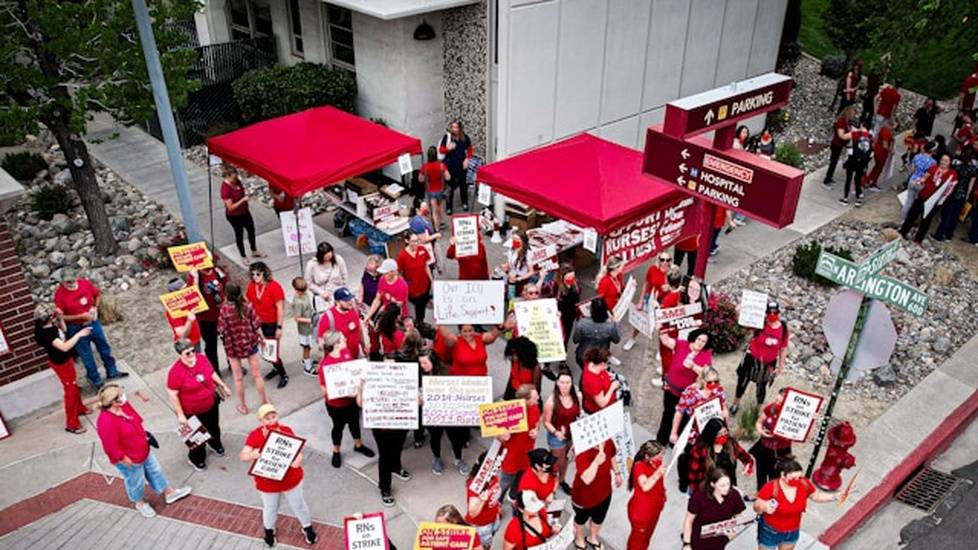
Most people say that history repeats itself. In the case of nursing strikes, much of its history has remained unchanged since the beginning.
Exploring nurse media archives, similar themes that plague modern nursing practice permeated early nursing culture. Newspapers, as early as 1920, cited complaints that charting was becoming too much and interfering with patient care. There were also ruminations of nurses wondering if their compensation was sustainable and whether the government could sustain rising healthcare costs.

Early Struggles and Pioneering Advocacy
It was around 1850 when Florence Nightingale established modern-day nursing. Nursing strikes and all forms of collective actions by nurses began shortly after.
Picture collective action and strikes in nursing within their broader historical backdrop. In its early days, nursing, led by Nightingale, emerged amid a first-wave feminism movement. Nightingale was no stranger to advocacy and reform and was the primary advocate for improving hospital sanitary conditions.
However, Nightingale’s emphasis on nursing as a calling sometimes led to the exploitation of nurses’ caring disposition, contributing to their vulnerability in the workplace. As healthcare workers became aware of this, they took collective action.
Popular Online Master of Science in Nursing (MSN) Programs

Chamberlain University is the #1 largest school of nursing with a community of more than 177,000 students, faculty, and alumni. Chamberlain offers BSN, MSN, NP and DNP programs online and has a long history of successfully delivering top quality education.
 CCNE
CCNE
 Online
 RN Required
Enrollment: Nationwide except CT, NY, RI

Whether you’re taking the first steps toward a nursing degree, seeking to advance as a nurse or want to hone your craft with specialized study, there’s a path for you at Purdue Global’s School of Nursing. Our programs were designed so that you can easily balance your lives at home and work with school - without sacrificing the rigor and cutting-edge curriculum of a quality nursing education.
CCNE
Online
RN Required
Enrollment: Nationwide, but certain programs have state restrictions. Check with Purdue for details.

The Berkley School of Nursing at Georgetown University is one of the world’s leading academic and research institutions, and the university has been delivering graduate nursing programs in a distance-learning environment since 2011. The university's online programs allow students to learn from wherever they are while they pursue an accredited, mission-driven nursing education that will allow them to deliver high-quality care.
CCNE
RN Required
Enrollment: Nationwide, excluding NY and WA.

Earn your nursing degree from one of the largest nursing education providers in the U.S. Walden University’s BSN, MSN, post-master’s APRN certificate, and DNP programs are accredited by the Commission on Collegiate Nursing Education (CCNE). Get enhanced practicum support with our Practicum Pledge.
CCNE
Online
RN Required
Enrollment: Nationwide, excluding CT, ND, NY and RI. Certain programs have additional state restrictions. Check with Walden for details.
The University of Texas at Arlington’s online MSN programs are designed to help nurses advance their careers with specialized graduate-level education. With flexible, fully online coursework, UTA’s Master of Science in Nursing programs are built to fit into your busy schedule while preparing you for leadership, education, or advanced practice roles.
CCNE
Online
RN Required
Enrollment: Nationwide
-
MSN - Family NP
-
MSN - Pediatric Primary Care NP
-
MSN - Pediatric Acute Care NP
-
MSN - Adult Gerontology Primary Care NP
-
MSN - Adult Gerontology Acute Care NP
-
MSN - Nursing Education
-
MSN - Nursing Administration
-
RN-to-MSN - Family NP
-
RN-to-MSN - Pediatric Primary Care NP
-
RN-to-MSN - Pediatric Acute Care NP
-
RN-to-MSN - Adult Gerontology Primary Care NP
-
RN-to-MSN - Adult Gerontology Acute Care NP
-
RN-to-MSN
1913: West Riding Asylum Collective Action
There is limited documentation of when the first true nursing strike occurred, but there are early examples of unrest and planned collective action. In 1913, at West Riding Asylum (now called Stanley Royd Hospital) in England, psychiatric nurses felt they weren’t valued or compensated compared to their hospital nurse counterparts. There were also concerns about the facility’s conditions.
Media at the time explored both issues of the strike. One unnamed nurse said, “Nurses, like other people, have the right to demand and secure adequate remuneration for their time, labour, and skill.” In a rebuttal to the strike, the same author wrote, “By leaving sick, helpless, and suffering patients unattended is utterly unjustifiable and abominable…it is difficult to speak of with restraint or moderation.” It’s unclear if the proposed West Riding strike ever occurred because of concerns regarding who would care for patients during the strike. However, asylum attendants established the National Asylum Workers’ Union around this period.
These positions—being pro-strike to provide proper patient care conditions and healthcare worker compensation, and being anti-strike for fear of patient safety—represent much of the strike dialogue until the mid-1900s.
1966: Youngstown, Ohio Mass Resignation
A New York Times article from December 1966 introduces the Ohio strike with the following text in the context of the increasing discussion of labor unions:
“People rarely think of the struggles of women and health care workers. Yet, in Youngstown, women and health care workers were involved in similar important struggles ...nurses accepted poor wages and working conditions largely while simply focusing on caring for patients.”
Nurses chose Ohio State Nurses Association representation, triggering negotiations with the Youngstown Hospital Association—disputes centered on pay, security, head nurses’ representation, and on-call pay. A mass resignation by Youngstown General Duty Nurses Association on December 1, 1966, gained local support. Talks led to an agreement on December 13, securing wage hikes, membership, compensation structures, and grievance protocols. Ultimately, the nurses and their representatives were satisfied with their new contracts and rescinded their resignations.
This is one of nurses’ first well-documented collective actions in the United States.
Popular Online RN-to-BSN Programs
Chamberlain University is the #1 largest school of nursing with a community of more than 177,000 students, faculty, and alumni. The school offers BSN programs online and has a long history of successfully delivering top quality education. Save up to 30%* on tuition with the RN-to-BSN Tuition Advantage Grant (*see Chamberlain website for details).
CCNE
Online
RN Required
Enrollment: Nationwide except CT, NY, RI

When you earn an ASU nursing degree, you are gaining skills from a respected and accredited institution. Our online nursing degrees are accredited by the Arizona State Board of Nursing and the Commission on Collegiate Nursing Education.
CCNE
Online
RN Required
Enrollment: Nationwide

WGU's award-winning online programs are created to help you succeed while graduating faster and with less debt. WGU is a CCNE-accredited, nonprofit university offering bachelor's and master's degrees in nursing, with the additional distinction of being named a Center of Excellence in Nursing Education by the National League for Nursing. Join a trusted, accredited online university to accelerate your nursing career on your schedule. Scholarships and financial aid are available.
CCNE
Online
RN Required
Enrollment: Nationwide
The University of Texas at Arlington’s online programs are designed to help you achieve more in your nursing practice with a Bachelor of Science in Nursing. They offer convenient, flexible options for completing your RN to BSN online, designed to fit into your busy schedule.
CCNE
Online
RN Required
Enrollment: Nationwide
Walden’s online programs for nursing meet rigorous standards for academic quality and integrity, and 100% of our College of Nursing didactic faculty are doctorally trained. With multiple degree completion options, you can choose a bachelor’s in nursing path that makes sense for your busy, unpredictable schedule.
CCNE
Online
RN Required
Enrollment: Nationwide, excluding CT, ND, NY and RI. Certain programs have additional state restrictions. Check with Walden for details.
Modern Nursing Strikes and Shaping Healthcare Policy
In the 21st century, a new wave of strikes emerged, bolstered by online and social media platforms. The media’s portrayal of these strikes created a sense of collective support, contrasting with the response seen in earlier 20th-century newspaper articles. There were many influential nursing strikes in the United States in 2000 and beyond. Here are just a few.
2001: Portland, Oregon OHSU Strike
In 2001, OHSU nurses had a 56-day strike for better wages, conditions, and nurse retention. They faced challenges like wages 12-19% below market rate, health insurance hikes, and loss of tuition benefits. The strike led to a pact with ONA, yielding benefits such as better overtime protection, health benefits, and a say in staffing.
2010: Minneapolis, Minnesota Strike
In 2010, over 12,000 Minnesota nurses participated in a 24-hour strike, highlighting nurse-patient ratios and patient safety concerns. At the time, it was one of the largest recorded nursing strikes. The strike prompted discussions about staffing levels, patient care, and the role of nurses in advocating for optimal working conditions. The strike, while short-lived, triggered substantial discussions about staffing adequacy, its direct correlation with patient care quality, and the pivotal role nurses play in advocating for optimal working conditions within healthcare settings.
2020 and Beyond: Continued Strikes
In March 2021, over 800 nurses at St. Vincent Hospital in Worcester, Massachusetts, initiated a strike. It would last 301 days and take 43 negotiation sessions, eventually becoming the longest strike in Massachusetts history. The new contract tackled staff shortages with increased nurse hiring and better wages.
Now, nursing strikes permeate mainstream media nearly every month. In 2022, there were over 17 nursing strikes throughout the United States.
The Ongoing Quest for Change
Many primary reasons for nursing strikes remain the same in modern nursing as in the origins of professional nursing. The biggest reasons include:
- Improved pay, cost-of-living raises, and better raise structure
- Increased compensation through better retirement plans, improved health insurance, or paid time off
- Better nurse retention to help mitigate staffing issues
- Mandated patient ratios
- Higher standards for patient care
Notably, most modern strikes end with improved negotiated contracts. However, these strikes are a temporary band-aid to the systemic issues in healthcare. To continue improving conditions, nurses continue to strike.
Frameworks that allow modern-day strikes include:
- Legal allowances for collective bargaining, like employment laws and contracts
- Public support and positive media perception
- Protected work stoppage rights
- Unionization
- The historical precedent of other successful strikes
- Travel nursing and strike contracts, keeping patients safe
- Compact nursing licenses, which allow nurses to practice more freely across the US
These structures have helped mitigate some of the fears of those who oppose strikes, especially concerning the continuity of patient care and safety.
The Bottom Line
Whether nurses believe strikes are the best way to push for change or not, one thing is clear -- nursing still faces many of the same issues over 150 years later, and nurses have never stopped advocating for their patients or their professional practice.