



Exploring The Doctor-Nurse Divide With Dr. Claire Lanier
Originally published on The Nursing Beat, March 27, 2025
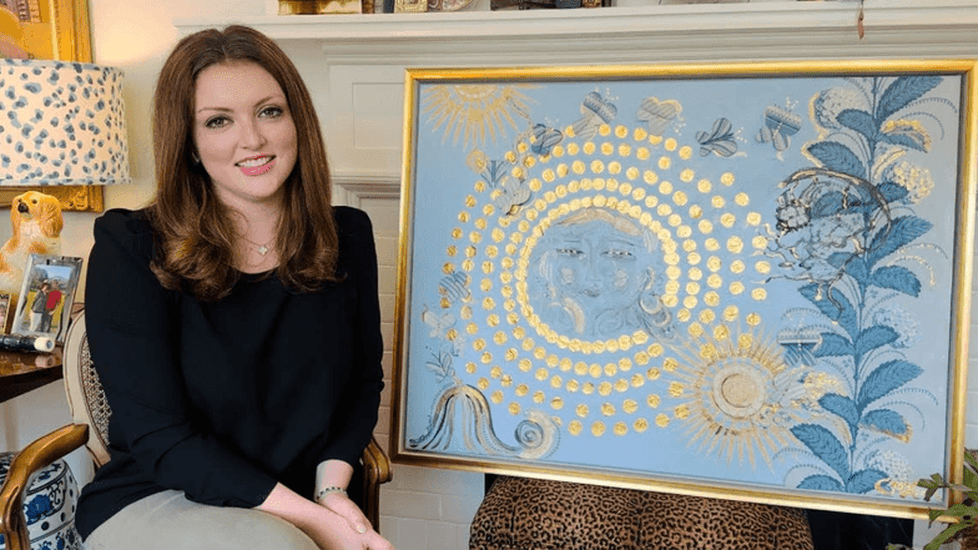
Dr. Claire Massagee Lanier, MD still fondly remembers the hum of the hospital corridors from her childhood, her mother’s background as a nurse, and her father’s colleagues pulling him aside to speak “medicalese.” At the time, she could only wonder what they were saying. “It felt like really important work was being done at the hospital. I loved to visit, or even just drive by,” she reminisces.
Now, Lanier is at the forefront of medical care as she prepares to finish her residency in a few months. Wrapping up residency, she’s reflecting on the difficulty of being a woman in medicine, the culture between doctors and nurses, and how creativity has been a lifeline as she navigates her experiences in healthcare.
To celebrate Doctor’s Day, The Nursing Beat sat down with Lanier, our first interview with an MD, to honor the collaboration between nurses and our physician partners.
Q: How Did You Get Into Medicine?
A: My father was a physician, and my mom was a nurse, so I grew up around medicine.
However, my father told me, “Medicine is hard for women,” and to consider all potential career options. I didn’t pursue medicine initially during college. It wasn’t until my dad had a major heart attack that I felt called to medicine. I did explore other healthcare roles besides being a physician, but ultimately, medicine felt like the right path.
I went back to school, took some prerequisites, and was grateful to get into medical school at Wake Forest School of Medicine in North Carolina, and am now a radiation oncology resident. I’ll finish my residency in June.
Popular Online RN-to-BSN Programs
Chamberlain University is the #1 largest school of nursing with a community of more than 177,000 students, faculty, and alumni. The school offers BSN programs online and has a long history of successfully delivering top quality education. Save up to 30%* on tuition with the RN-to-BSN Tuition Advantage Grant (*see Chamberlain website for details).
 CCNE
CCNE
 Online
 RN Required
Enrollment: Nationwide except CT, NY, RI

When you earn an ASU nursing degree, you are gaining skills from a respected and accredited institution. Our online nursing degrees are accredited by the Arizona State Board of Nursing and the Commission on Collegiate Nursing Education.
CCNE
Online
RN Required
Enrollment: Nationwide

WGU's award-winning online programs are created to help you succeed while graduating faster and with less debt. WGU is a CCNE-accredited, nonprofit university offering bachelor's and master's degrees in nursing, with the additional distinction of being named a Center of Excellence in Nursing Education by the National League for Nursing. Join a trusted, accredited online university to accelerate your nursing career on your schedule. Scholarships and financial aid are available.
CCNE
Online
RN Required
Enrollment: Nationwide
The University of Texas at Arlington’s online programs are designed to help you achieve more in your nursing practice with a Bachelor of Science in Nursing. They offer convenient, flexible options for completing your RN to BSN online, designed to fit into your busy schedule.
CCNE
Online
RN Required
Enrollment: Nationwide

Walden’s online programs for nursing meet rigorous standards for academic quality and integrity, and 100% of our College of Nursing didactic faculty are doctorally trained. With multiple degree completion options, you can choose a bachelor’s in nursing path that makes sense for your busy, unpredictable schedule.
CCNE
Online
RN Required
Enrollment: Nationwide, excluding CT, ND, NY and RI. Certain programs have additional state restrictions. Check with Walden for details.
Q: Why Did You Choose Radiation Oncology?
A: I ended up in radiation oncology because I really liked the intersection of technology and medicine, as well as the nice balance of having new patients and new cases, but getting to follow patients through their treatments.
Like most specialties in medicine, there’s a lot of multidisciplinary work. We work with other physicians, nurses, radiation therapists, physicists, radiation biologists, and every type of surgeon.
I feel like people facing cancer have a perspective on life that I don’t have, and you almost can’t have unless you’re facing something trying to take your life.
Q: How Do You Feel About the Phrase ‘Medicine Is Hard for Women’?
A: I would never want to deter any woman from pursuing any career they want, but a lot of professions are hard for women. Women in the workplace are often planning for and thinking about children far earlier than men have to.
As women, we’ve been told to lean into careers and opportunities, but sometimes it feels like we lean in with nothing to support us. As someone who went to medical school and is very driven, it’s hard because you can’t be the best at all of it. It’s a hard balance. You often feel like you’re not excelling and that you’re mediocre at all of it.
I want to model that women can be great parents and still work. I want to model that I love my children, but I also do other important things, and can still be a great physician. I can take the empathy I’ve learned raising kids and apply that to work.
Q: Do You Think Medical School Perpetuates an “Us” vs. “Them” Culture Between Doctors and Nurses?
A: Throughout my training, I was always taught to listen to your nurses. If I get a call—night or day—from my nurses saying our patient doesn’t look good, I go to the bedside right away. Especially starting out, I’ve only ever been told to respect the opinions of nurses. However, doctors do train independently from nurses, which could be the cause of stifling some communication between the specialties.
Nurses are the face of what we do on the frontlines, and they may see our patients more than we do as providers. Nurses are in the literal center of the department at a nurse’s station without doors. The doctors are often kind of shut away in dictation rooms or in an office. I think that even the physical design of healthcare reinforces the silos we operate in.
Some of the harsh behavior of doctors toward nurses might be an old-school mentality, or just the long-term stress of being in healthcare.
Popular Online Nurse Practitioner (NP) Programs
Chamberlain University is the #1 largest school of nursing with a community of more than 177,000 students, faculty, and alumni. The school offers MSN-NP programs online and has a long history of successfully delivering top quality education. Chamberlain's Commitment to Completion Grant helps RNs earn advanced degrees with savings up to $9,100.
CCNE
Online
RN Required
Enrollment: Nationwide except CT, NY, RI

The Berkley School of Nursing at Georgetown University is one of the world’s leading academic and research institutions, and the university has been delivering graduate nursing programs in a distance-learning environment since 2011. The university's online programs allow students to learn from wherever they are while they pursue an accredited, mission-driven nursing education that will allow them to deliver high-quality care.
CCNE
RN Required
Enrollment: Nationwide, excluding NY and WA.

Whether you’re taking the first steps toward a nursing degree, seeking to advance as a nurse or want to hone your craft with specialized study, there’s a path for you at Purdue Global’s School of Nursing. Our programs were designed so that you can easily balance your lives at home and work with school - without sacrificing the rigor and cutting-edge curriculum of a quality nursing education.
CCNE
Online
RN Required
Enrollment: Nationwide, but certain programs have state restrictions. Check with Purdue for details.
-
MSN - Family NP
-
MSN - Psychiatric Mental Health NP
-
MSN - Adult-Gerontology Acute Care NP
-
MSN - Adult-Gerontology Primary Care NP
-
MS-DNP - Adult NP
-
MS-DNP - Family NP
-
MS-DNP Path - Psychiatric Mental Health NP
-
MS-DNP Path - Adult-Gerontology Acute Care NP
-
Postgrad Cert - Family NP
-
Postgrad Cert - Psychiatric Mental Health NP

Earn your nursing degree from one of the largest nursing education providers in the U.S. Walden University’s BSN, MSN, post-master’s APRN certificate, and DNP programs are accredited by the Commission on Collegiate Nursing Education (CCNE). Get enhanced practicum support with our Practicum Pledge.
CCNE
Online
RN Required
Enrollment: Nationwide, excluding CT, ND, NY and RI. Certain programs have additional state restrictions. Check with Walden for details.
The University of Texas at Arlington’s online MSN programs are designed to help nurses advance their careers with specialized graduate-level education. With flexible, fully online coursework, UTA’s Master of Science in Nursing programs are built to fit into your busy schedule while preparing you for leadership, education, or advanced practice roles.
CCNE
Online
RN Required
Enrollment: Nationwide
-
RN-to-MSN - Family NP
-
RN-to-MSN - Pediatric Primary Care NP
-
RN-to-MSN - Pediatric Acute Care NP
-
RN-to-MSN - Adult Gerontology Primary Care NP
-
RN-to-MSN - Adult Gerontology Acute Care NP
-
MSN - Family NP
-
MSN - Pediatric Primary Care NP
-
MSN - Pediatric Acute Care NP
-
MSN - Adult Gerontology Primary Care NP
-
MSN - Adult Gerontology Acute Care NP
Q: What Do You Think About Doctor’s Day vs. Nurses Week?
A: Nurses Week is a longer celebration, but I certainly think that institutionally, physicians have a lot of respect and perks.
Physicians often have access to the best parking, provider lounges, free refreshments, and more. I think we also see a lot more medicine represented in the news and social media.
Despite this, most of the family members I interact with at the hospital say the most important person during their stay was their nurse, or even their nursing assistant. Everyone is playing an important role, and every role should feel respected.
Q: How Does Creativity Play a Role in Healthcare for You?
A: It’s important for me to have another outlet to center me. It helps me be a better physician, mom, and person when I have something that brings me joy. I love arranging flowers, being crafty, and planning birthday parties.
I recently was able to do an art project for the 25th anniversary of our Gamma Knife machine, which is a fancy radiation tool that allows us to provide really high doses of localized radiation intracranially. I really enjoyed that. The piece will be hung in our department and was just electronically published on the cover of the International Journal of Radiation Oncology, Biology, Physics.
Being creative helps you make connections and think outside the box to solve problems. I think anyone would be better served by having a creative outlet.
Final Thoughts
As Lanier moves forward in her career, she carries with her the lessons learned both inside and outside the hospital. From navigating the challenges of being a woman in medicine to finding meaning in the connections she builds with patients and colleagues, she is committed to growth, balance, and breaking down barriers.
We hold a deep respect for doctors and women in medicine, and we recognize the importance of bridging the gap between all members of the care team. We believe that mutual respect and collaboration are essential because, ultimately, we all rely on each other to provide the best patient care.