




NYC Nurse Strike Update: NewYork- Presbyterian Reaches Tentative Agreement!
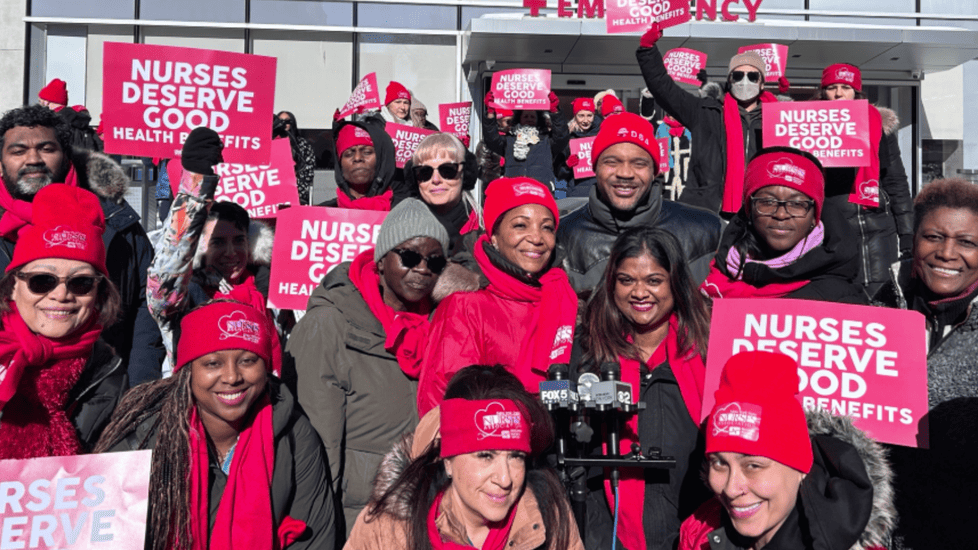
- Historic Strike Nears End: Agreements have been ratified at Mount Sinai and Montefiore, while nurses at NewYork-Presbyterian are voting on a new tentative deal that could end the longest nurses’ strike in NYC history.
- Major Contract Wins: New agreements include 12%+ wage increases, enforceable safe staffing standards, stronger workplace violence protections, and new AI safeguards to protect nurses’ roles.
- Return to Work Underway: More than 10,000 nurses have already ratified contracts and returned to work, with the remaining 4,200 nurses’ vote expected to determine the official end of the citywide strike.
Image source: ABC7
After weeks of a strike involving 15,000 nurses at major New York City hospitals, including Mount Sinai, Montefiore, and NewYork-Presbyterian, a ratified agreement has finally been reached at Mount Sinai and Montefiore, and a new tentative agreement has been reached with NewYork-Presbyterian that could bring the entire citywide strike to a close. The NewYork-Presbyterian deal is now out for a ratification vote; if approved, it will end the longest nurses’ strike in New York City history.

Around 10,500 nurses at Montefiore and the Mount Sinai system have already voted to ratify their tentative agreements and returned to work, while 4,200 nurses at NewYork-Presbyterian—who previously rejected an earlier proposal—have secured a stronger three‑year tentative contract and are currently voting on whether to accept it.
The NY strike started as nurses fought for safe staffing ratios, workplace violence protections, fair wages, and preserved healthcare benefits, while union leaders accused hospitals of union‑busting tactics, such as allegedly firing three nurses shortly before the strike began.
NewYork-Presbyterian Tentative Agreement
Roughly 4,200 NewYork‑Presbyterian nurses, the last group still on strike in New York City, reached a tentative three‑year agreement with the hospital system after about six weeks on strike. The tentative deal was announced shortly after midnight going into Friday, Feb. 20, 2026 (late‑night talks on Thursday into early Friday). Voting runs through 6 pm on Saturday. Here are the key terms of the agreement:
-
Wages: Salary increases of more than 12% over three years to support recruitment and retention.
-
Safe staffing: Strengthened, enforceable safe staffing standards and commitments to add nurses to improve patient care.
-
Workplace violence: Stronger protections from workplace violence, explicitly listed by NYSNA as a key win.
-
AI safeguards: New safeguards around use of artificial intelligence, included in the contract for the first time, to protect nurses’ roles and judgment as technology expands.
-
Job security and benefits: Protection of health benefits from cuts and layoff protections, described as beating back aggressive takeaways on healthcare and job security.
Montefiore and Mount Sinai Hospital Agreement
According to the New York Nurses Union, the tentative agreement between Montefiore, Mount Sinai Hospital and Mount Sinai Morningside and West was reached late Sunday/early Monday and included wins for the nurses on:
- Enforceable safe staffing standards
- Increasing the number of nurses to improve patient care
- Health benefits for staff
- Increased protection from workplace violence
- Protection for immigrant and trans patients and nurses
- Safeguards against artificial intelligence in their contracts for the first time
- Salary increases by more than 12% over the life of the 3-year contract to recruit and retain nurses for safe patient care
- Succesfully pushabck against aggressive takeaways on healthcare and safe staffing enforcement
- All nurses are able to work after ratification
“For four weeks, nearly 15,000 NYSNA members held the line in the cold and in the snow for safe patient care," said NYSNA President Nancy Hagans, RN, BSN, CCRN, in a press release. "Now, nurses at Montefiore and Mount Sinai systems are heading back to the bedside with our heads held high after winning fair tentative contracts that maintain enforceable safe staffing ratios, improve protections from workplace violence, and maintain health benefits with no additional out-of-pocket costs for frontline nurses.”
NYSNA Executive Director Pat Kane, RN, CNOR(e), added: “I’m so proud of the resilience and strength of NYSNA nurses. They have shown that when we fight, we win. Nurses sacrificed their own pay and healthcare while on strike to defend patient care for all of New York. We helped galvanize a movement for worker and healthcare justice that reached beyond New York City."
Strike Key Dates and Numbers
- Strike Authorization Vote: December 22, 2025
- 97% of participating nurses voted to authorize a strike
- Contract Expiration: December 31, 2025
- 10-Day Strike Notice Delivered: January 2, 2026
- Strike Start Date: January 12, 2026
A Long Battle
Before the tentative agreement was reached, union leaders and hospital representatives met at the Javits Center, where NYSNA presented what it called “comprehensive revised proposals.”
According to the union, the updated package focuses on strengthening safe-staffing standards without weakening enforcement, protecting nurses’ health benefits, addressing workplace violence, and offering wage increases aimed at recruiting and retaining bedside nurses.
“Nurses are not asking for the moon,” NYSNA has said repeatedly. “They are asking for safe conditions to care for patients and fair compensation to stay in the profession.”
Hospitals Release Statement
NewYork-Presbyterian has said that the union is seeking wage increases of roughly 25%, while Mount Sinai has claimed NYSNA previously proposed an average nurse salary approaching $200,000, figures that hospitals argue are unrealistic.
In a joint statement, the three hospital systems said they have put forward “fair, reasonable and responsible” offers that include annual raises along with continued healthcare and pension benefits.
“Today, we made a fair, reasonable, and responsible economic proposal that provides annual wage increases and continues generous healthcare and pension benefits, under an economic structure that works for all of the parties and the safety-net hospitals that are tied to our economic terms. We are now assessing the rest of the union’s proposals so that we can respond with a comprehensive settlement offer in order to end the strike and bring our nurses back.”
Benefits: A Partial Resolution
One of the most contentious issues early in the strike, health benefits, saw some movement early on in negotiations.
At Mount Sinai and NewYork-Presbyterian, both sides agreed to maintain nurses’ health benefits, removing what had been a major obstacle in negotiations. At Montefiore, benefits were never a central sticking point.
However, NYSNA said problems remained elsewhere.
The union alleged that Brooklyn Hospital Center, a separate facility not currently on strike, has failed to pay nurses’ healthcare and pension benefits for three consecutive months. NYSNA demanded that the hospital honor a prior agreement that was reached earlier this year to avert a strike.
Support Of Striking Nurses
Al Sharpton Rallies with Nurses on MLK Day
On January 19, Rev. Al Sharpton joined striking nurses at a rally outside Mount Sinai Morningside Hospital to mark Martin Luther King Jr. Day.
Addressing hundreds of picketing nurses in the cold, Sharpton linked their fight to King's legacy: “Martin Luther King Day died in Memphis fighting for wages for garbage workers, and I believe he would want those of us that come in his tradition to be standing with nurses and standing with those that should be getting wages for saving the lives and caring for people that the private hospitals and other hospitals seem not to care about.” He added, “This is not only a labor issue, this is a civil rights issue. This is a human rights issue.”

NYSNA President Nancy Hagans spoke after Sharpton, calling out the hospitals: “I am asking the three richest hospitals in New York City, Montefiore Medical Center, Mount Sinai, NewYork Presbyterian, what the hell is wrong with you?” The rally followed community health screenings offered by nurses earlier that day.
Mayor Zohran Mamdani and Sen. Bernie Sanders
New York City Mayor Zohran Mamdani and Vermont Sen. Bernie Sanders stood with striking nurses on the West Side picket line. Meanwhile, hospitals report using out-of-state nurses under Governor Hochul's Executive Order No. 56 to maintain staffing amid a flu surge and the strike.

State Response:
In anticipation of and response to the walkout, Governor Kathy Hochul issued Executive Order No. 56 on Friday, declaring a State Disaster Emergency in Bronx, Nassau, New York, and contiguous counties due to healthcare staffing shortages tied to the strike and an ongoing severe influenza surge. The order — in effect through February 8, 2026 — temporarily suspends or modifies licensure requirements, regardless of Nurse Licensure Compact participation, to allow out-of-state or non-registered healthcare professionals to practice in New York, helping hospitals staff critical services during the labor action.
What Happens Next?
For now, the strike continues, and thousands of nurses remain on picket lines while hospitals rely on contingency staffing to maintain operations.
With no agreement yet announced, it’s unclear how much longer the standoff will last. What is clear is that the outcome could set a powerful precedent, not just for New York City, but for nurses nationwide watching closely as debates over staffing, pay, and working conditions play out in real time.
As negotiations resume, nurses say they’re holding the line.
“This is about the future of bedside nursing,” NYSNA leaders have said. “And we’re not backing down.”
Why Nurses Are Striking
According to NYSNA, the strike authorization centers on three core issues that nurses say directly impact patient safety and the sustainability of the profession:
1. Safe Staffing Levels
Nurses are demanding enforceable, contractual staffing ratios, citing years of unsafe patient loads that worsened during and after the COVID-19 pandemic.
2. Wages and Compensation
Union leaders say nurses’ pay has not kept pace with:
- Inflation
- Rising workloads
- Increased reliance on travel nurses
3. Healthcare Benefits
Nurses are also seeking guarantees that protect their health insurance and benefits, which they say are essential to retention and workforce stability.
Why This Strike Matters
This labor action highlights ongoing challenges nurses across the country continue to face:
- Patient safety risks caused by chronic understaffing
- Burnout and retention issues from unsustainable workloads
- Economic pressure on frontline healthcare workers despite rising hospital executive compensation
NYSNA leaders emphasize that the strike threat is not about walking away from patients, but about protecting them.
What Happened During the 2023 NYC Nurse Strike
This is not the first time NYC nurses have taken collective action. In January 2023, more than 7,000 nurses went on strike at major hospitals including:
- Mount Sinai Hospital
- Montefiore Health System
- Wyckoff Heights Medical Center
After three days of picketing, nurses reached tentative agreements and returned to work.
What Nurses Achieved in 2023
According to NYSNA, the 2023 strike resulted in several key wins:
- Enforceable safe staffing language at Mount Sinai and Montefiore
- Financial penalties for hospitals that failed to meet staffing requirements
- Immediate implementation of new staffing standards in certain units
- Community-focused commitments, including nurse recruitment initiatives
- Nurse-student partnerships aimed at building a local pipeline of nurses
NYSNA President Nancy Hagans called the outcome a “historic victory,” stating that nurses proved collective action could lead to real, enforceable improvements in patient care.
Why Nurses Say the Fight Isn’t Over
Despite the 2023 agreements, nurses say unsafe staffing and retention issues persist and in some cases have worsened.
During the 2023 strike, nurses reported:
- Nurse-to-patient ratios increasing from 1:4 to 1:6
- Missed breaks and meals
- Emergency department assignments as high as 20 patients per nurse
Union leaders say many of the same structural problems remain today, which is why nurses are again preparing to strike if negotiations fail.
What This Means for Patients
NYSNA has emphasized that patients should not delay seeking care.
During past strikes, hospitals have taken measures such as:
- Discharging or transferring patients
- Postponing elective procedures
- Hiring temporary replacement staff
Nurses stress that they are striking for patient safety, not against it, and that seeking necessary medical care is never considered crossing a picket line.
Nurse.org will continue to update this story as negotiations develop.
🤔Nurses, share your thoughts about this below.
If you have a nursing news story that deserves to be heard, we want to amplify it to our massive community of millions of nurses! Get your story in front of Nurse.org Editors now - click here to fill out our quick submission form today!